.svg)

Azdan Apps

NetSuite E-Invoicing Jordan
Generates and submits JoFotara-compliant e-invoices directly from NetSuite, with XML generation, JSON encryption, QR embedding, and validation status stored natively.

JoFotara Integration

XML Generation

JSON Encryption

QR Embedding
Invoice Validation
Status Sync
Compliance Tracking
Invoice Archiving
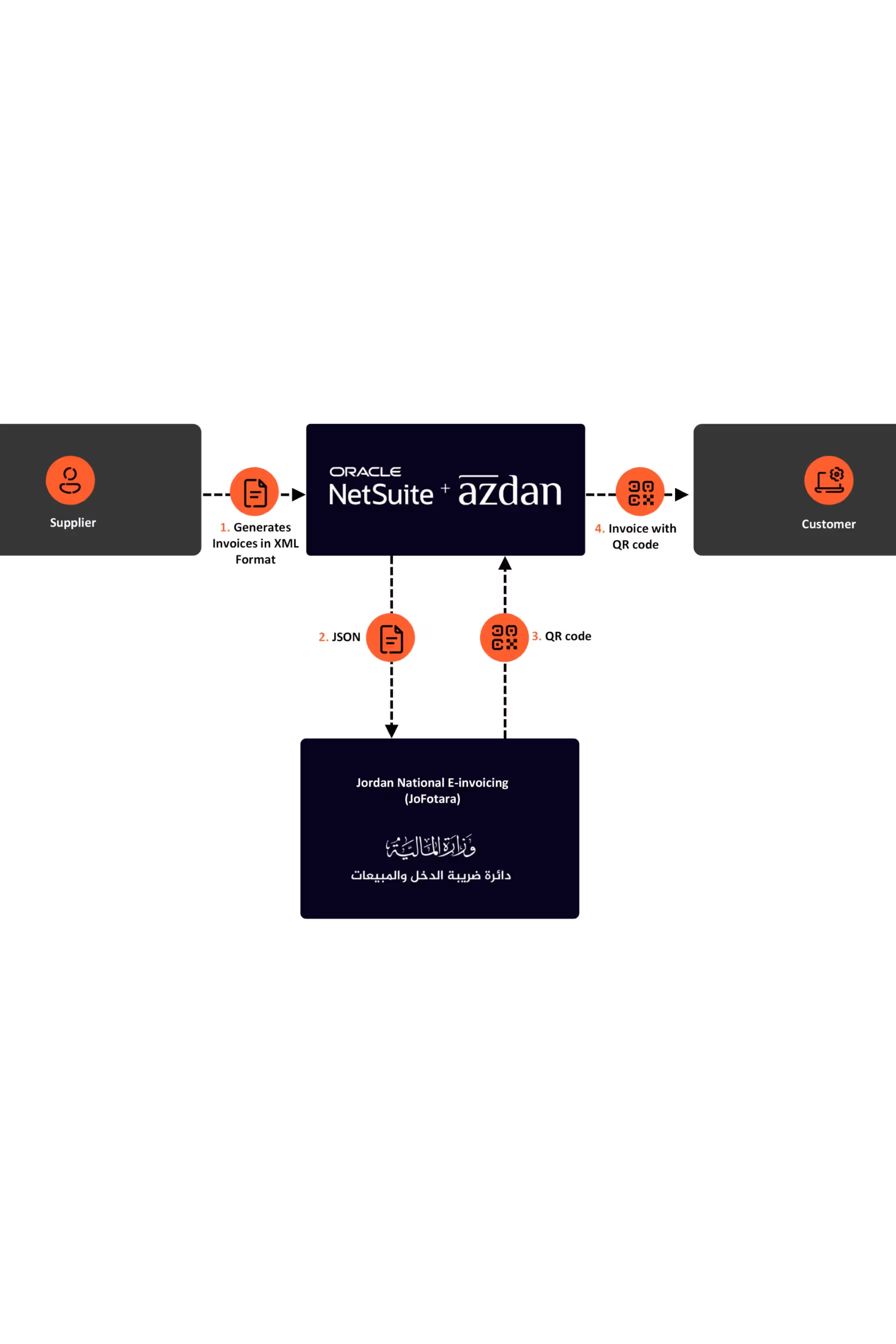
Azdan Apps NetSuite E-Invoicing Jordan connects your NetSuite instance directly to JoFotara, generating compliant XML invoices, encrypting them to JSON, and receiving QR codes and validation responses back into NetSuite automatically.

Built on NetSuite
JoFotara-certified integration
XML to JSON encryption


Invoice Generation
Generates JoFotara-compliant invoices in UBL XML 2.1 format from NetSuite transactions and encrypts them to JSON for submission, capturing all required customer and transaction data per ISTD specifications.
 UBL XML 2.1 invoice generation from NetSuite sales transactions
- XML encrypted to JSON format per JoFotara submission requirements
- Customer data capture including address, tax registration number, and legal name
- Configurable company information including VAT registration number and subsidiary details
Free Demo
Use Case
Jordan-registered businesses issuing invoices under the ISTD e-invoicing mandate from an active NetSuite environment.

Outcome
Every invoice generated and formatted to JoFotara specification without manual data entry or format conversion.

JoFotara Submission & Validation
Submits encrypted JSON invoices to JoFotara and handles the validation response automatically, embedding the QR code into the approved invoice and storing the registration number and status back in NetSuite.
- Direct JSON submission to JoFotara (Jordan National E-invoicing System)
- Validation response processed automatically with success or failure status stored per invoice
- QR code embedded into approved XML invoice upon successful JoFotara validation
- Invoice registration number and approving authority code stored against originating NetSuite record
Free Demo
Use Case
Finance and compliance teams submitting invoices to Jordan's ISTD and distributing approved documents to buyers.
Outcome
JoFotara submission and QR code embedding handled end-to-end inside NetSuite with no manual portal steps.
Compliance & Visibility
Provides a real-time JoFotara compliance dashboard and full invoice archive inside NetSuite, covering validation statuses, QR codes, and approved e-document storage across all Jordanian entities.
- Real-time dashboard showing JoFotara validation statuses, submission results, and failed invoices
- Full archive of approved invoices, QR codes, and validation responses per submission
- Multi-entity and multi-country support through a single Global API integration
- Audit trail per invoice covering all submission attempts and JoFotara responses
Free Demo
Use Case
Multi-entity businesses operating in Jordan alongside other regional e-invoicing mandates on NetSuite.
Outcome
Full JoFotara compliance history accessible in NetSuite across all Jordanian entities on one platform.

Why E-Invoicing Jordan
Built for JoFotara Compliance Inside NetSuite

100% Native to NetSuite
No third-party tools or middleware. Every record runs inside NetSuite with full data integrity.
Global API, Multi-Country Ready
One integration covers Jordan (JoFotara), Saudi Arabia (ZATCA), and Egypt (ETA). Add a new country compliance without adding a new integration or disrupting existing operations.
XML UBL 2.1 to JoFotara Format
NetSuite invoices in UBL XML 2.1 are automatically converted and encrypted to the JSON format required by JoFotara, with no manual reformatting or external tools needed.
Continuous Transaction Control
Invoice registration number, approving authority code, and processing status are all returned from JoFotara and stored against the originating NetSuite record automatically.
Peppol & Exchange Network Ready
Connects to Peppol and other national and international exchange networks directly from within NetSuite, supporting cross-border compliance alongside JoFotara.
Full Audit Trail
Every submission, JoFotara response, validation outcome, and QR code is logged against the originating NetSuite record for inspection at any time.
What's Included
Everything in Azdan Apps NetSuite E-Invoicing Jordan

JoFotara Invoice Processing
Generation, encryption, and submission
A fully native NetSuite solution covering the complete JoFotara e-invoice lifecycle — from XML generation and JSON encryption through JoFotara submission and automated QR code and validation status storage.
This includes:
- JoFotara-compliant XML invoice generation
- XML to JSON encryption — secure JoFotara submission
- QR code embedded after JoFotara validation
- Approved invoice and status auto-stored in NetSuite

Compliance & Visibility
Dashboards, archiving, and multi-entity
Real-time JoFotara compliance dashboard and full invoice archive built inside NetSuite — covering validation responses, QR codes, and approved e-document storage across all entities and invoice volumes.
This includes:
- Real-time JoFotara validation status dashboard
- Full archive of approved invoices and QR codes
- No limits on subsidiaries or invoice volumes
- Audit trail per invoice across all submissions