
ERPNext UAE E-Invoice processing with Azdan
Create and submit a sales invoice in ERPNext, follow its progress in Azdan UAE E-Invoice, and return to the original ERPNext record to complete your review.
Your company’s connection, invoice release rules and return of results are already set up. Use your normal finance role. The ERPNext screenshots are public examples from Frappe’s documentation, with different invoice numbers, USD amounts and sample taxes. Follow your own invoice number and your company’s approved UAE tax treatment throughout.
1. Open the Sales Invoice list
Go to Accounting > Sales and Receivables > Sales Invoice. Find an existing draft or select Add Sales Invoice. Use the ID, Company and Customer filters to check that the sale has not already been invoiced.
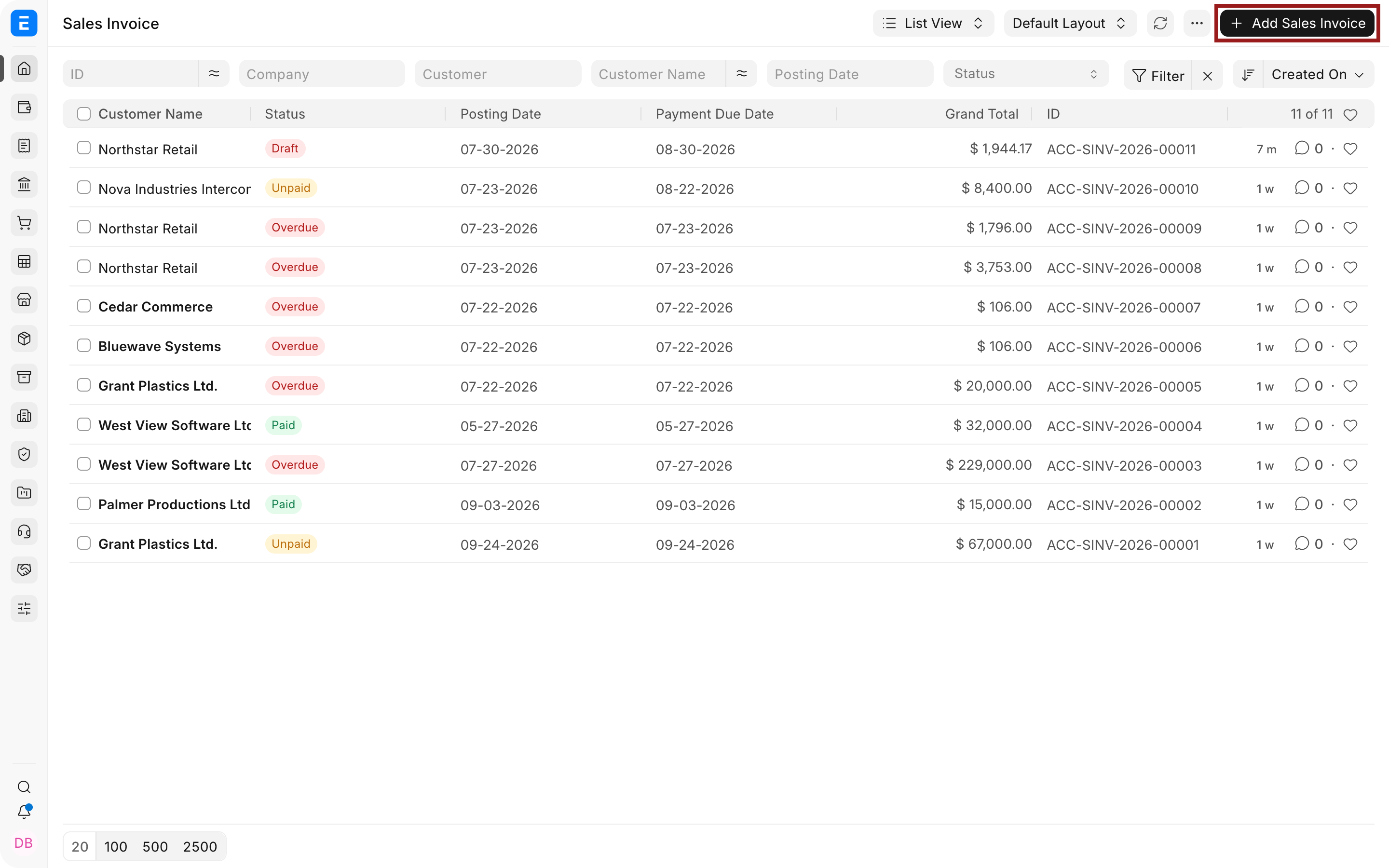
If the sale already has a Sales Order or Delivery Note, use Create > Sales Invoice on that document so the invoice retains its original references. Continue with the invoice created by that action.
2. Check the company and customer details
On Details, review Company, Customer, Posting Date and Payment Due Date. Open Currency and Price List to check the invoice currency and conversion rate, where applicable.
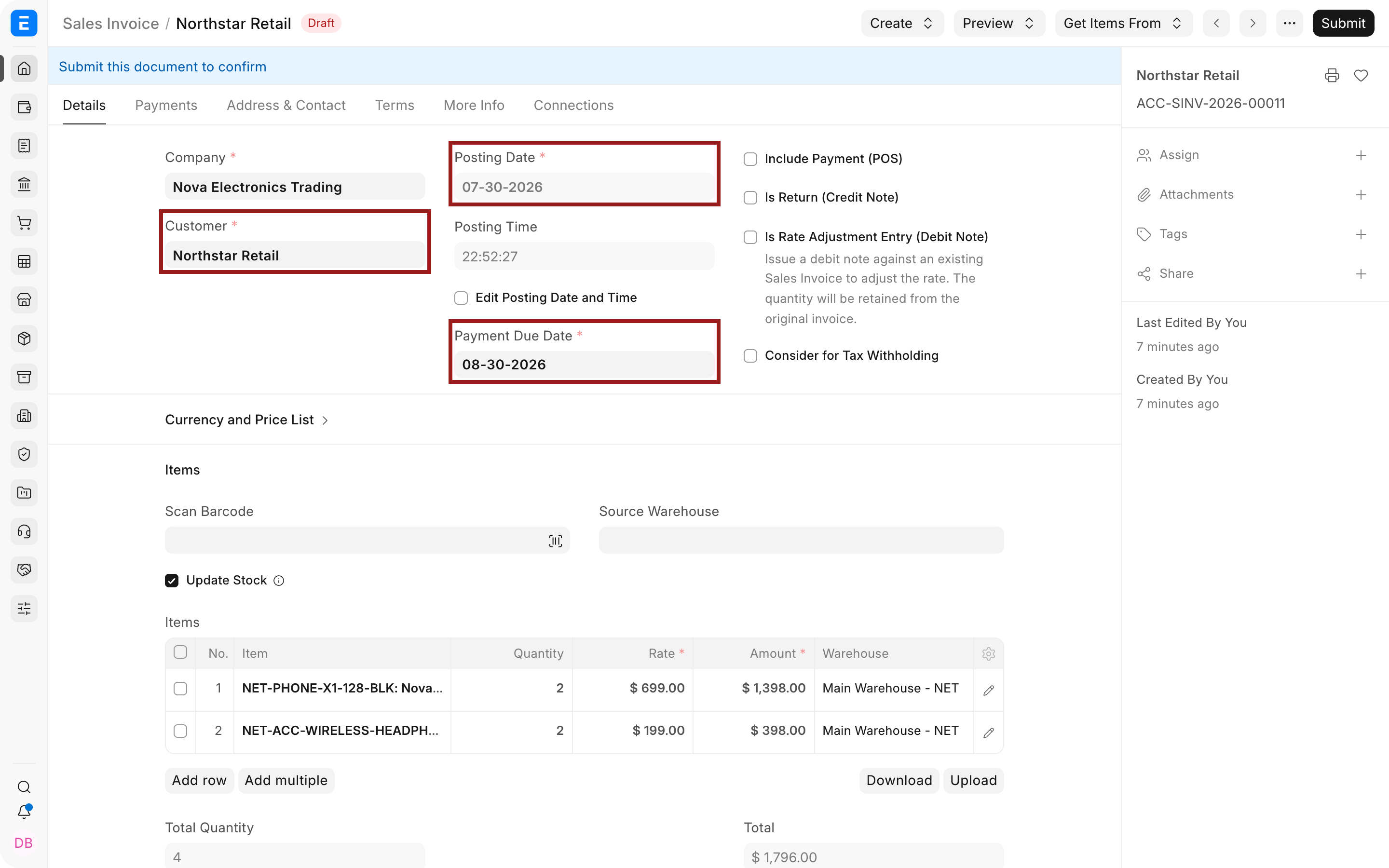
- Under Address & Contact, confirm the legal customer name and billing address. Check any separate shipping address required for the sale.
- Confirm the customer’s tax registration and electronic delivery identifier in the records used by your company’s connection. A customer email address alone is not an e-invoicing delivery identifier.
- Review the customer purchase order reference and agreed payment terms. Open Payments to check the schedule and any advance allocations.
- Resolve missing information before release. After changing a customer record, check the invoice itself to make sure it contains the intended values.
3. Review items and VAT
In Items, use Add row for another product or service. Check the description, quantity, unit, rate and amount against the approved sale. The pencil at the end of a row opens its additional details.
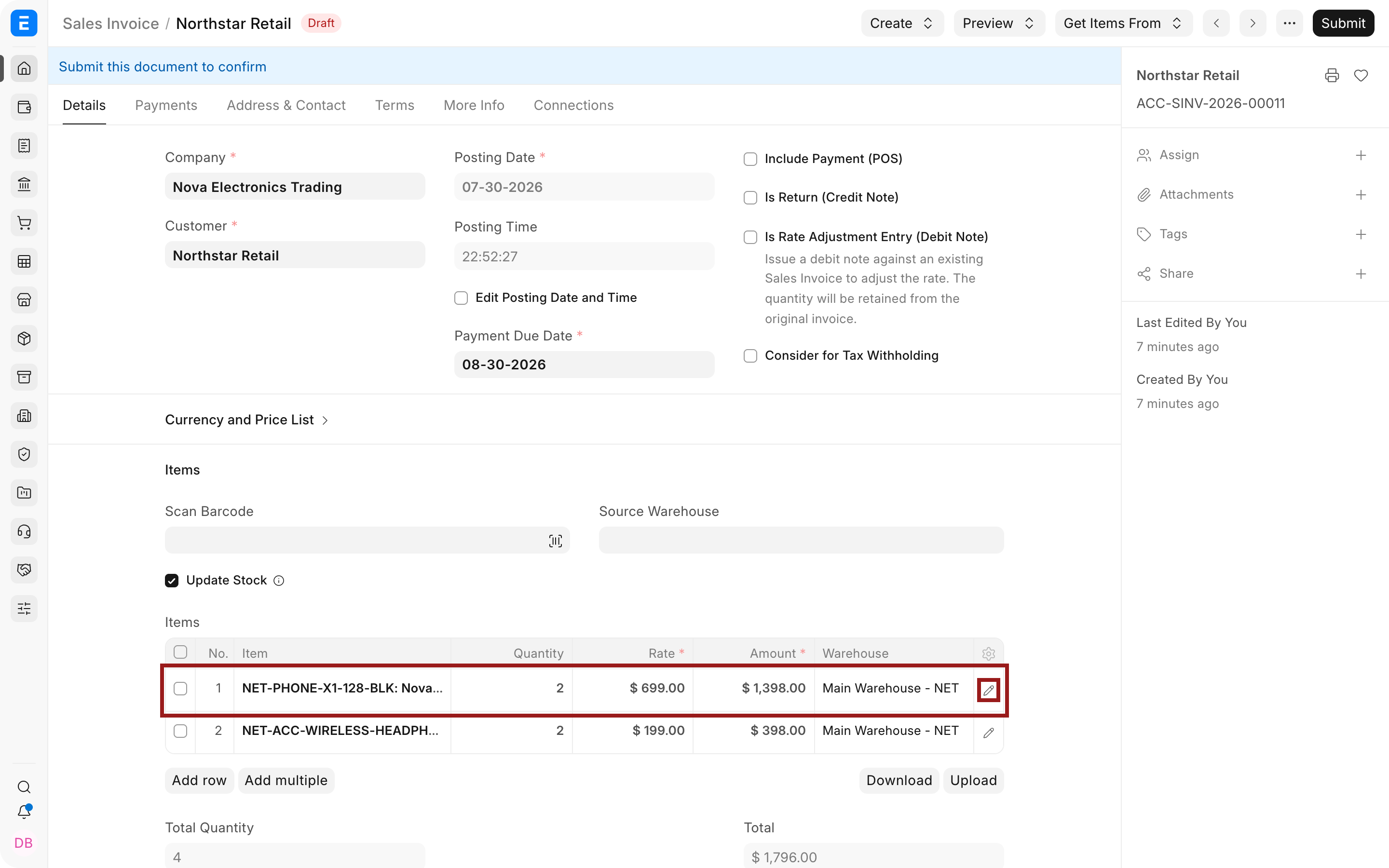
Under Taxes and Charges, review the selected Tax Category and Sales Taxes and Charges Template, then check the actual tax rows. A template name alone is not enough: confirm the account, calculation basis, rate and calculated amount.

- Check whether the agreed prices include or exclude tax, and that discounts are reflected in the taxable amounts.
- Where different items have different tax treatments, review their Item Tax Template and the resulting tax amounts.
- Reconcile the line totals, taxes, Grand Total, Rounding Adjustment and Rounded Total, where used. Compare the document total with Azdan later; an outstanding balance may already include payments or credits.
4. Save and submit the invoice
Select Save while the record is new or has unsaved changes. Complete the required review or approval, then select Submit at the upper right of the saved draft. Confirm the submission when prompted. Note the invoice ID.
A saved draft has not posted the sale. Submission posts the accounting entries. Your company may release the invoice to Azdan at submission or after a separate approval or release action; follow the process already configured for your company.
Check Update Stock before submitting. Use it only when this invoice should record the goods leaving stock. Leave it off if a Delivery Note already recorded the same movement, or if you are invoicing a service. E-invoicing does not require a second stock movement.
Printing or emailing the ERPNext invoice does not confirm that Azdan received it. Continue with the checks below even if the customer already has a PDF.
5. Let the connection prepare the e-invoice
After release, the connection prepares the electronic document from ERPNext. Keep working with the original invoice; there is no need to enter the same sale manually in Azdan.
| ERPNext information | What to match in Azdan |
|---|---|
| Invoice ID and dates | The invoice number, issue date and payment due date. |
| Company and Customer | The correct seller and buyer, addresses and identifiers. |
| Items and amounts | Descriptions, quantities, units, prices and discounts. |
| Taxes, currency and totals | The tax treatment, tax amounts, currency and document total. |
| Purchase reference and payment terms | The references and payment information agreed with the customer. |
Azdan checks the electronic document before delivery. If required information is missing or the amounts do not reconcile, read the validation result and resolve the source issue before retrying.
6. Find the invoice in Azdan
In the Azdan portal, open Invoicing > Transactions > Outbound. Search for the ERPNext invoice ID, then open the matching transaction.
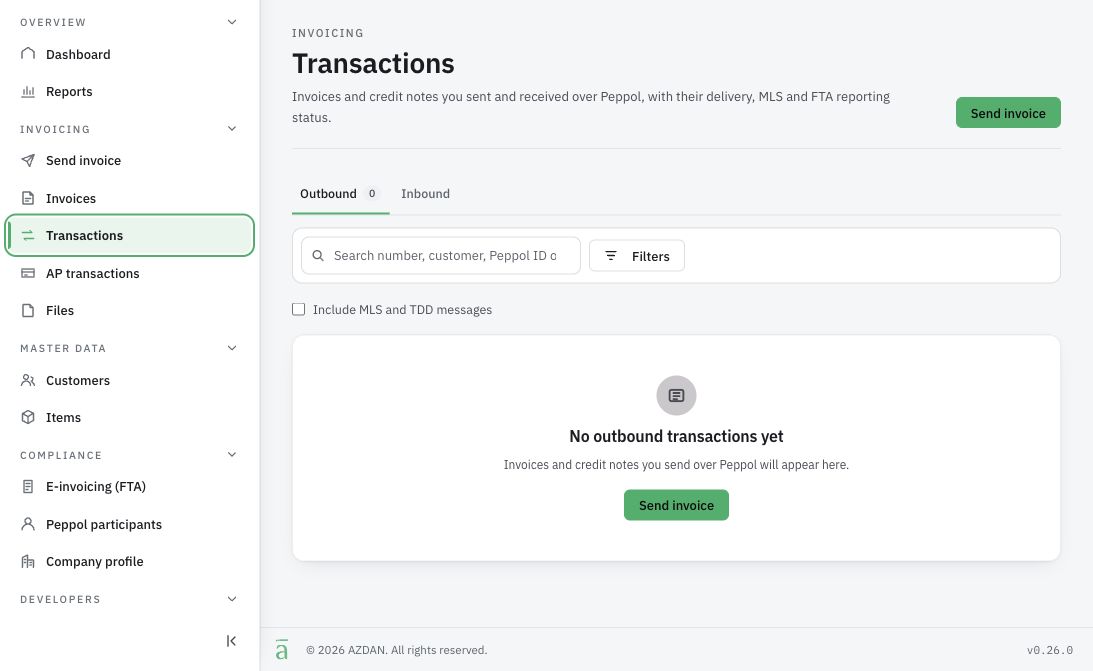
Match the company, customer, invoice number, currency, VAT and document total. Keep the Azdan transaction reference with your invoice follow-up.
If the invoice is missing, clear restrictive filters and check that the ERPNext record was submitted and released. If it is still missing after your normal processing interval, give your administrator the invoice ID, company and release time. Do not create another Sales Invoice to try again.
7. Check the delivery and reporting results
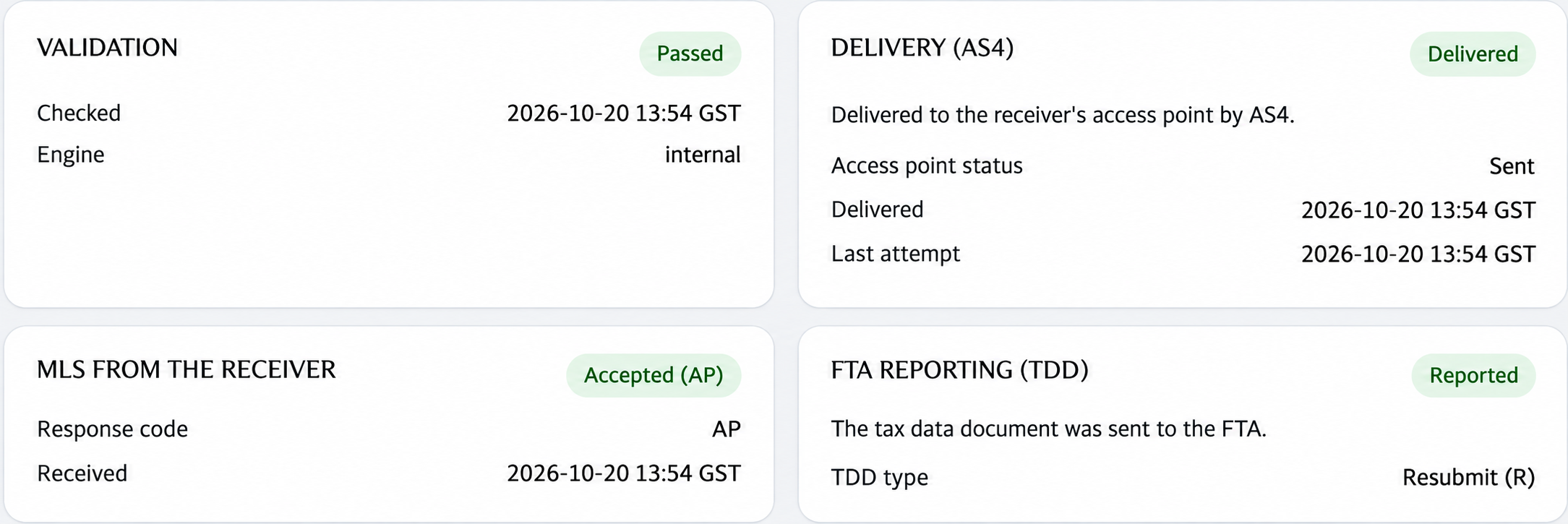
Read each result separately. The stages can update at different times, so open the details behind a pending, failed or rejected result.
| Result | What the accountant should check |
|---|---|
| Validation | Passed means the document passed Azdan’s checks. If it failed, read the field or amount identified in the message. |
| Delivery (AS4) | Delivered confirms delivery to the receiving provider. It does not establish buyer approval or payment. |
| MLS from the receiver | Read the response and reason. Technical acceptance is separate from the buyer’s commercial approval. |
| FTA Reporting (TDD) | Read the reporting outcome and available response details. Reported means the tax data was sent; that label alone does not establish FTA acceptance. |
Retain the available invoice and response records under your company’s filing process. An ERPNext status such as Unpaid, Overdue or Paid describes accounting or settlement; use Azdan and the returned integration results to check electronic delivery and reporting.
8. Resolve failures without duplicating the invoice
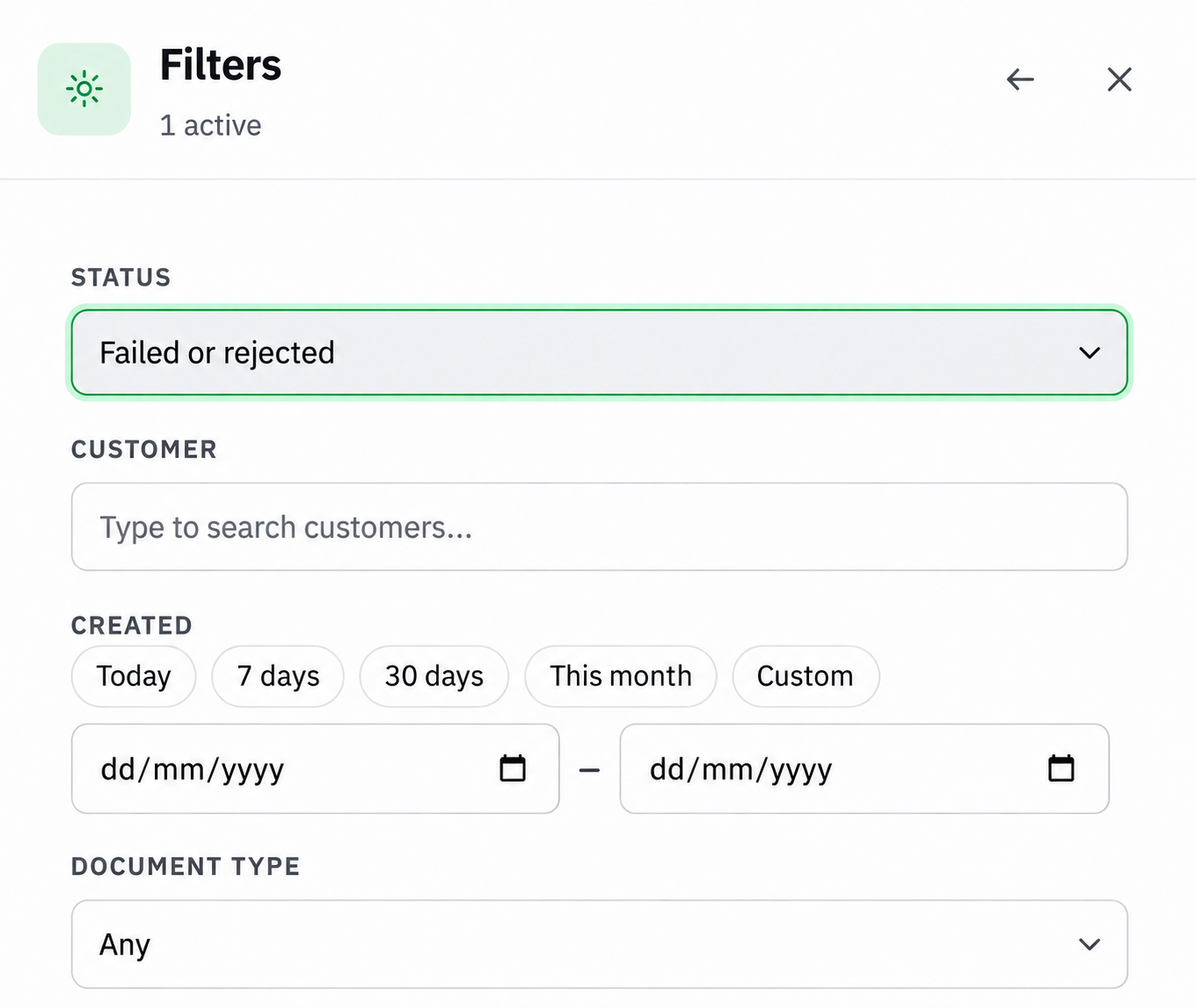
For your daily review, open Filters in Azdan Transactions, choose Failed or rejected, set the date range and apply it. Review In progress separately. Open each affected invoice to read its message.
- Missing or incorrect information: Check the field named in the message against ERPNext. A change to master data may not update a submitted invoice or a document already prepared for sending.
- Failed before delivery: Have the responsible colleague approve the correction and use your configured retry or release process. Confirm that the document has not already been delivered, then check the new attempt.
- Still in progress: Check for a service incident and allow automatic retries to complete. Avoid repeated submissions. Escalate with the invoice ID, Azdan reference, exact message and time if there is no progress.
- Receiver or FTA rejection: Read the reason and assign an owner. A successful delivery result does not close a separate reporting or receiver issue.
ERPNext restricts changes to submitted invoices. Do not cancel and amend an invoice merely to refresh an e-invoicing status. Have the accounting owner decide how a locked field must be corrected and how the connected document will be handled. If an issued invoice needs a reduction, follow the credit-note process below.
9. Create a credit note when a correction is required
Open the original submitted Sales Invoice and select Create > Return / Credit Note. This creates a return record linked to the original sale.
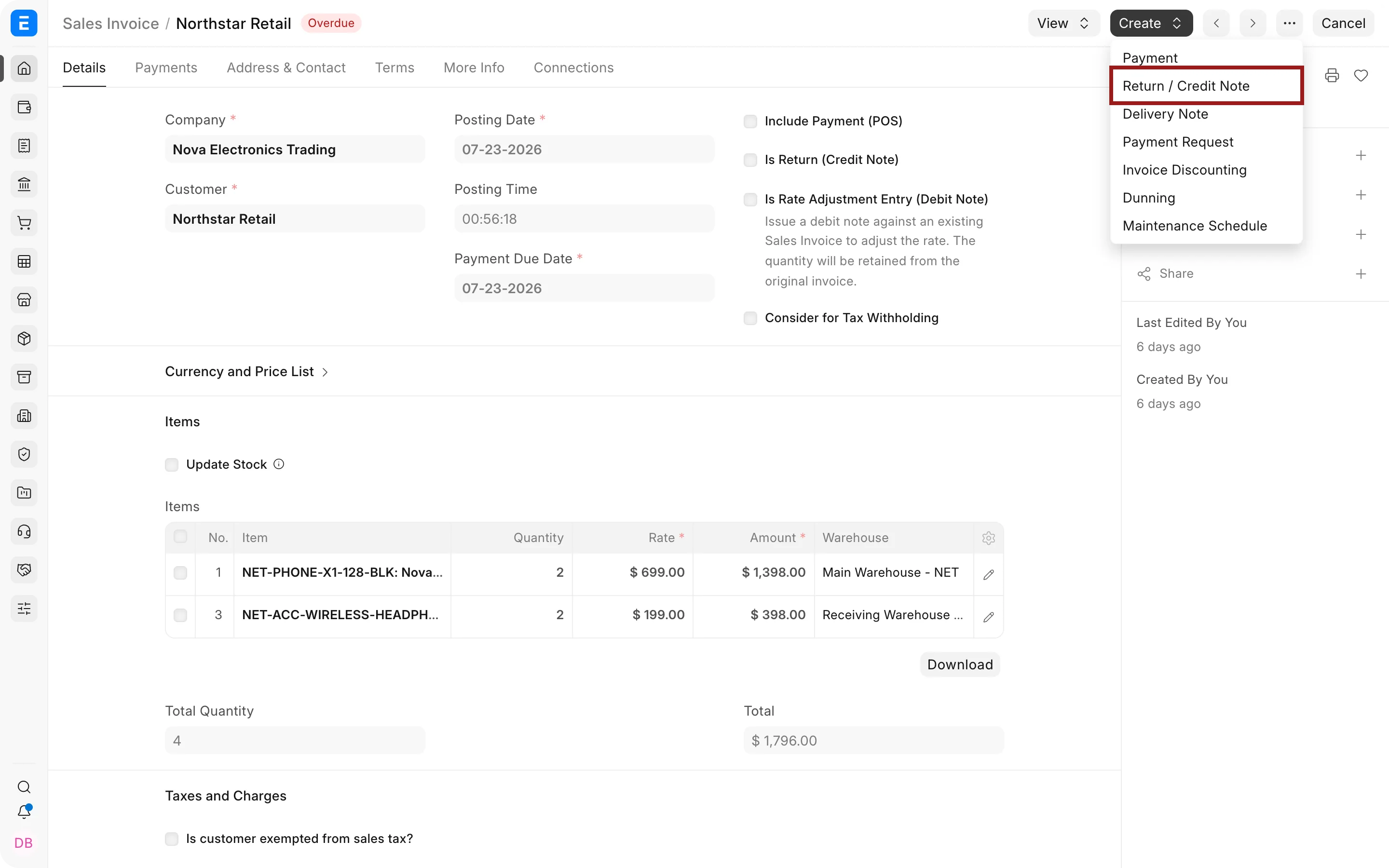
Check Is Return (Credit Note) and Return Against. Confirm the company, customer, posting date and original invoice reference before changing the returned lines.
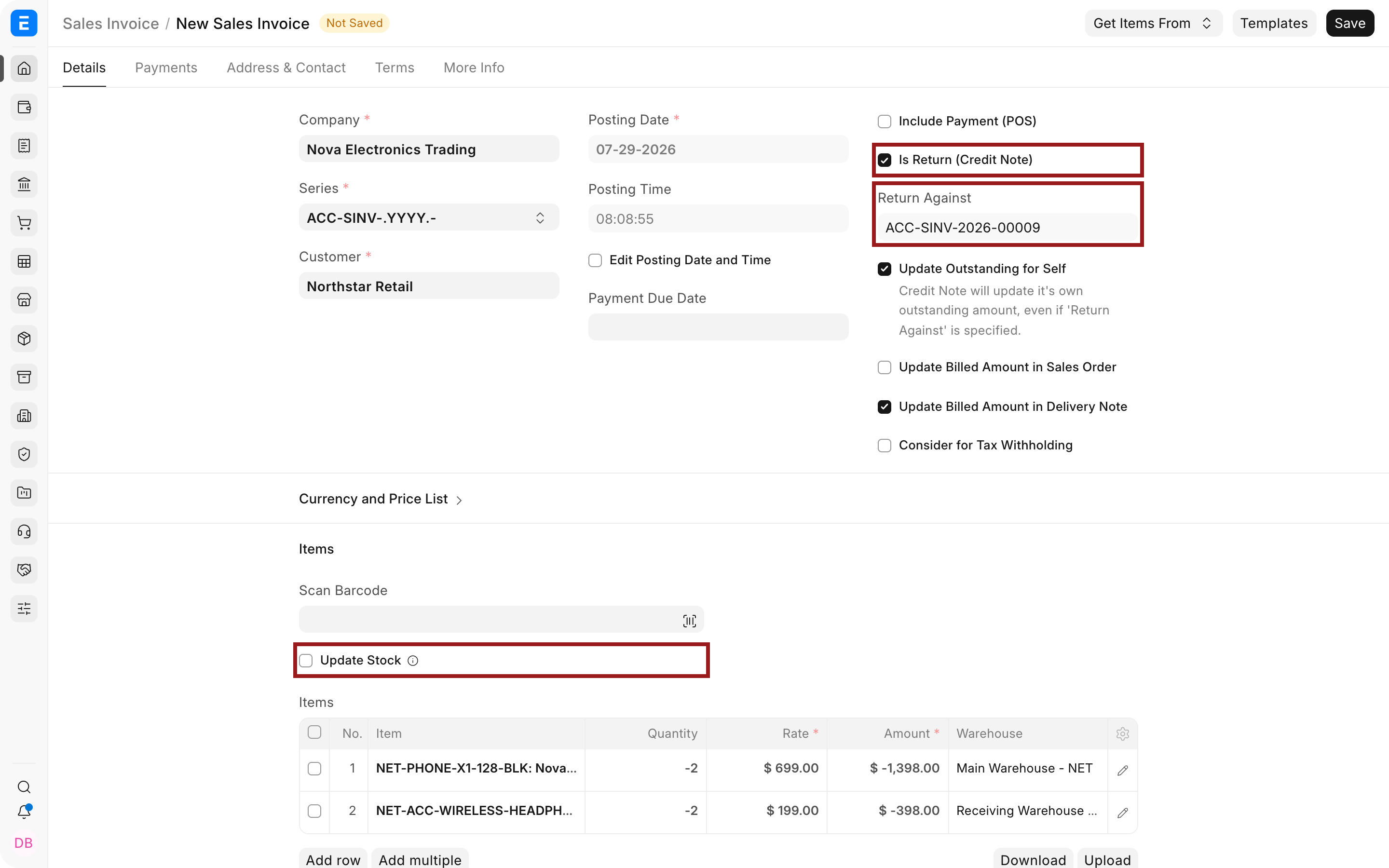
Keep only the lines being credited and use the appropriate negative quantities. For a partial return of one unit, enter −1, not the full original quantity. Check the returned amounts and taxes against the approved adjustment.
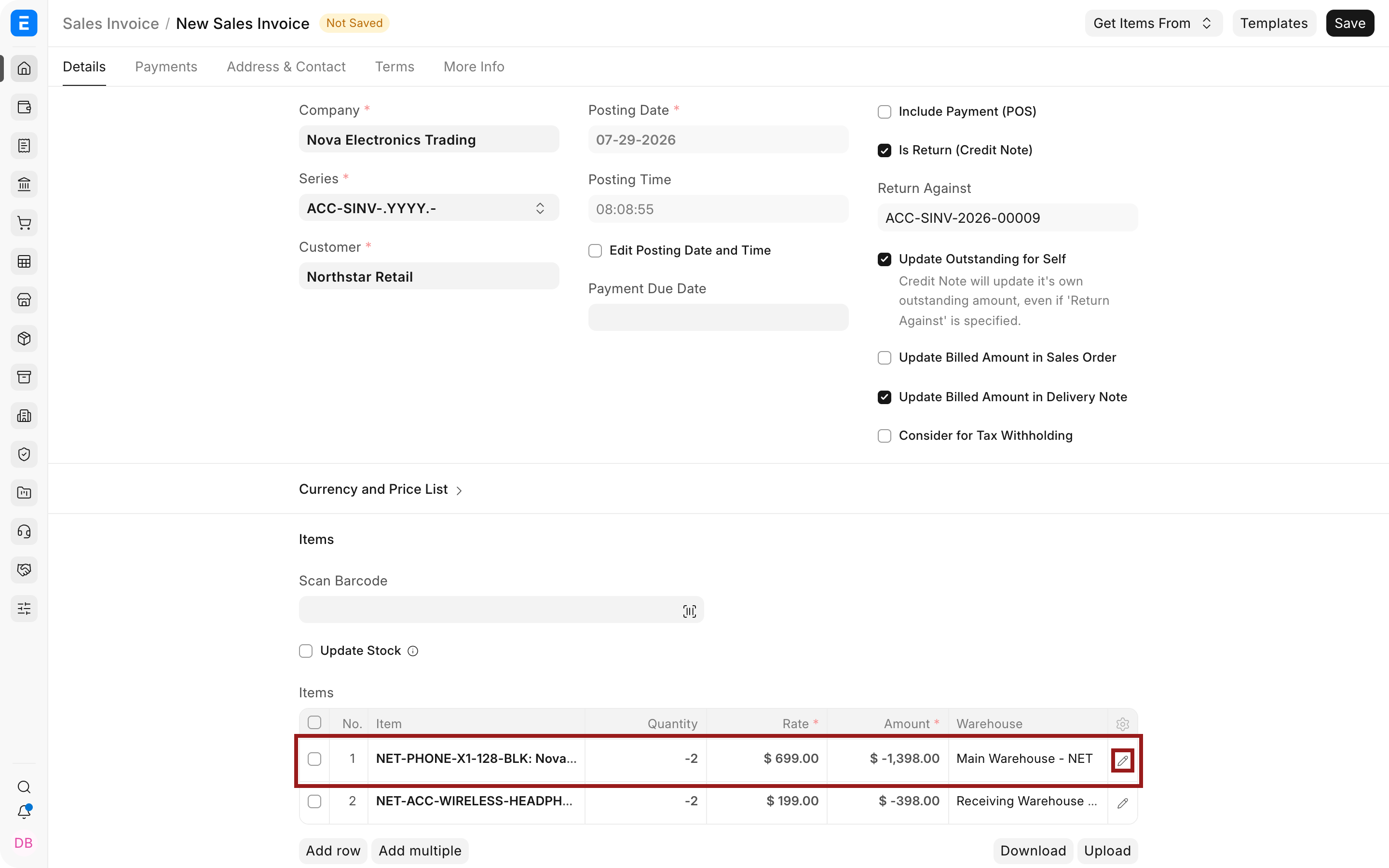
Enable Update Stock only if this credit note should receive goods into inventory. Leave it off for a value-only correction or when a return Delivery Note already received the goods. Confirm the receiving warehouse when stock is updated.
Record the correction reason and original invoice reference in the fields used by your connection. Save, review and Submit the credit note, then complete its configured e-invoicing release. Search Azdan using the credit note’s own number and check the same four results.
Review how the credit is allocated against the customer’s balance. Referencing the original invoice does not, by itself, prove the intended settlement has been completed. Handle any refund or allocation through your normal receivables process and retain both document references.
10. Return to the original ERPNext invoice
Return to the Sales Invoice list and search the original invoice ID. Open the matching record and confirm that it is the invoice you checked in Azdan.
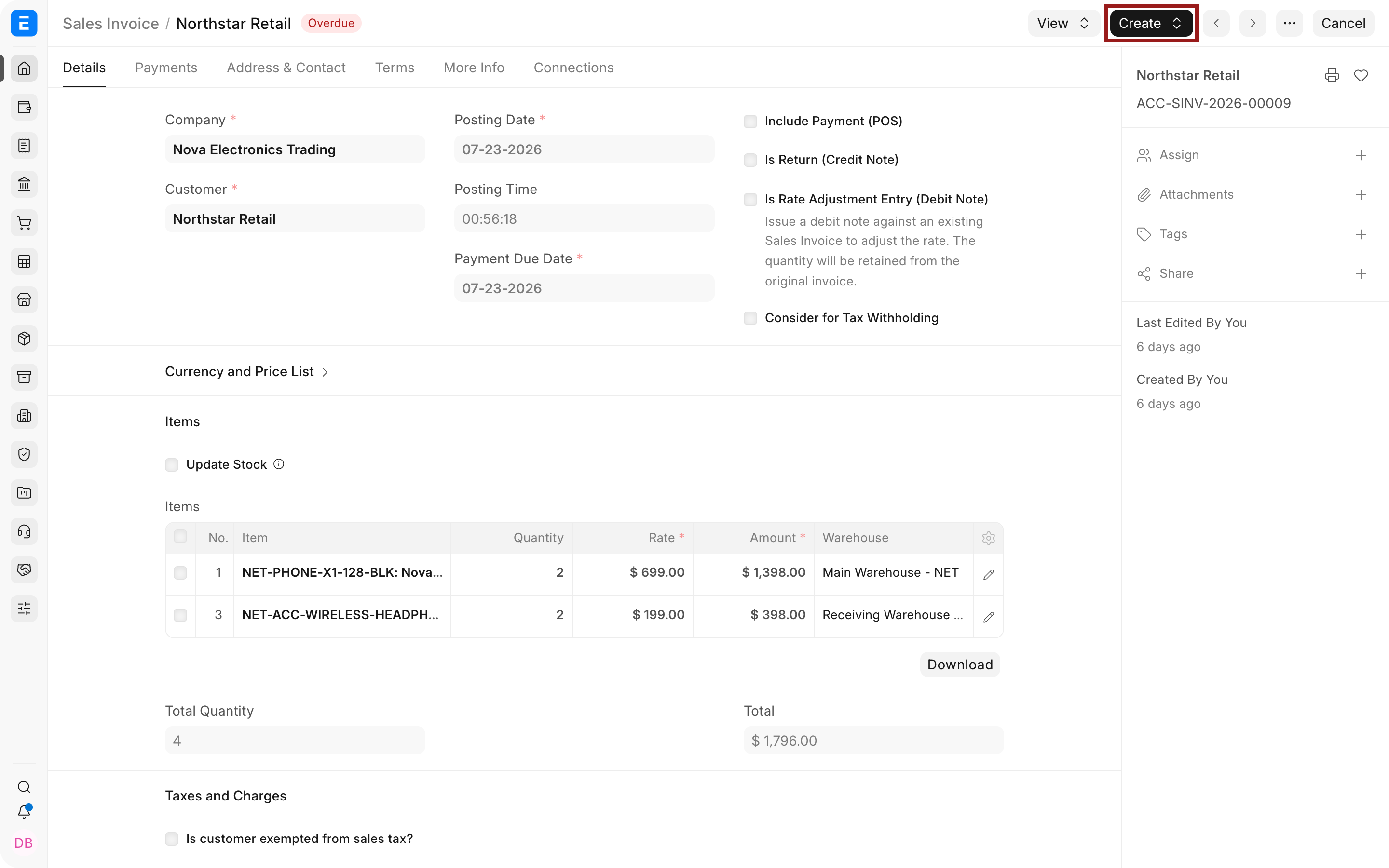
- Match the company, customer, currency, VAT and original document total to the Azdan transaction. Check a related credit note using its own number.
- Open the result fields, attachment, comment or linked integration record used by your company. Confirm the Azdan reference, latest returned outcomes and last update time.
- If the return update is missing or older than Azdan, ask the administrator to check the connection. Standard ERPNext invoice statuses do not show Azdan’s four processing results.
- Check any related customer credit or payment separately. Delivery of an e-invoice does not record a receipt, clear a receivable or issue a refund.
The review is complete when the original ERPNext invoice matches the correct Azdan transaction, the amounts agree, the returned results have been checked and each unresolved issue has an owner.
The standard ERPNext screens shown here do not contain custom Azdan controls. Your company’s existing configuration determines the release action and where the returned results appear.
Related guides
Azdan UAE E-Invoice documentation