.svg)


Quick Answer
The best CRM software in UAE depends on your company size and how deeply sales needs to connect with finance. For mid-market and enterprise companies that want CRM, ERP, and financials in one system, NetSuite CRM is the strongest choice. Zoho CRM and HubSpot lead for SMEs on a budget, Salesforce and Microsoft Dynamics 365 dominate the large enterprise segment, and regional platforms like Corporate Stack and Zarina CRM win on local compliance, Arabic support, and UAE-based implementation teams. This guide compares all 20 platforms on UAE VAT and e-invoicing readiness, WhatsApp integration, Arabic language support, and ERP connectivity.
Why CRM Selection Is Different in the UAE
Most global CRM roundups miss what actually matters for a business operating in Dubai, Abu Dhabi, or the wider Emirates. Four factors change the shortlist.
E-invoicing is coming in 2027. The UAE Ministry of Finance is phasing in mandatory e-invoicing from 2027 over the Peppol network. Your CRM does not send e-invoices itself, but if quotes and orders in your CRM do not flow cleanly into a compliant billing system, you will be re-keying data at exactly the moment regulators start watching invoice quality. CRMs that sit inside an ERP, or integrate tightly with one, remove that risk.
WhatsApp is the sales channel. In the UAE, deals move on WhatsApp, not email. A CRM without native or well-supported WhatsApp Business API integration will leave half your pipeline invisible.
Arabic and multi-currency are table stakes. Companies trading across the GCC need Arabic interfaces or at least Arabic-friendly data handling, plus AED, SAR, EGP, and USD in the same pipeline.
Local support beats a global brand. Implementation partners on the ground in Dubai or Riyadh, working your time zone and your public holidays, often matter more than a feature checklist.
How We Selected and Ranked These Platforms
We evaluated each platform on five criteria: fit for UAE mid-market businesses, total cost of ownership, integration depth with ERP and finance systems, WhatsApp and omnichannel capability, and availability of local implementation support. Rankings reflect fit for the typical UAE company of 20 to 500 employees. A startup of five people and a listed enterprise will weigh these differently, and we flag the best fit for each platform.
Comparison Table
1. NetSuite CRM
NetSuite CRM by Azdan is the only platform on this list where CRM, ERP, financials, inventory, and billing live in a single database. For UAE companies, that architecture solves the problem every standalone CRM eventually creates: the gap between a closed deal and a compliant invoice. A quote in NetSuite becomes a sales order, then an invoice, then a VAT return line item, with no integration middleware and no duplicate data entry. When mandatory e-invoicing arrives in 2027, that unbroken chain from opportunity to invoice becomes a compliance advantage, not just a convenience.
The CRM itself covers the full front office: sales force automation, quota and forecast management, upsell and renewal tracking, marketing automation, partner relationship management, and customer service cases. Because it reads live financial data, sales reps see real credit limits, actual order history, and true item availability while quoting. Multi-currency, multi-subsidiary, and Arabic language support are built in, which matters for groups operating across the UAE, Saudi Arabia, and Egypt.
Best for: Mid-market and enterprise companies (roughly 30 to 1,000+ employees) that have outgrown disconnected tools and want one system for the entire lead-to-cash cycle.
Limitations: Overkill for a five-person sales team that only needs pipeline tracking. NetSuite is a business platform decision, not a departmental purchase, and implementation requires an experienced regional partner.
.webp)
2. Zoho CRM
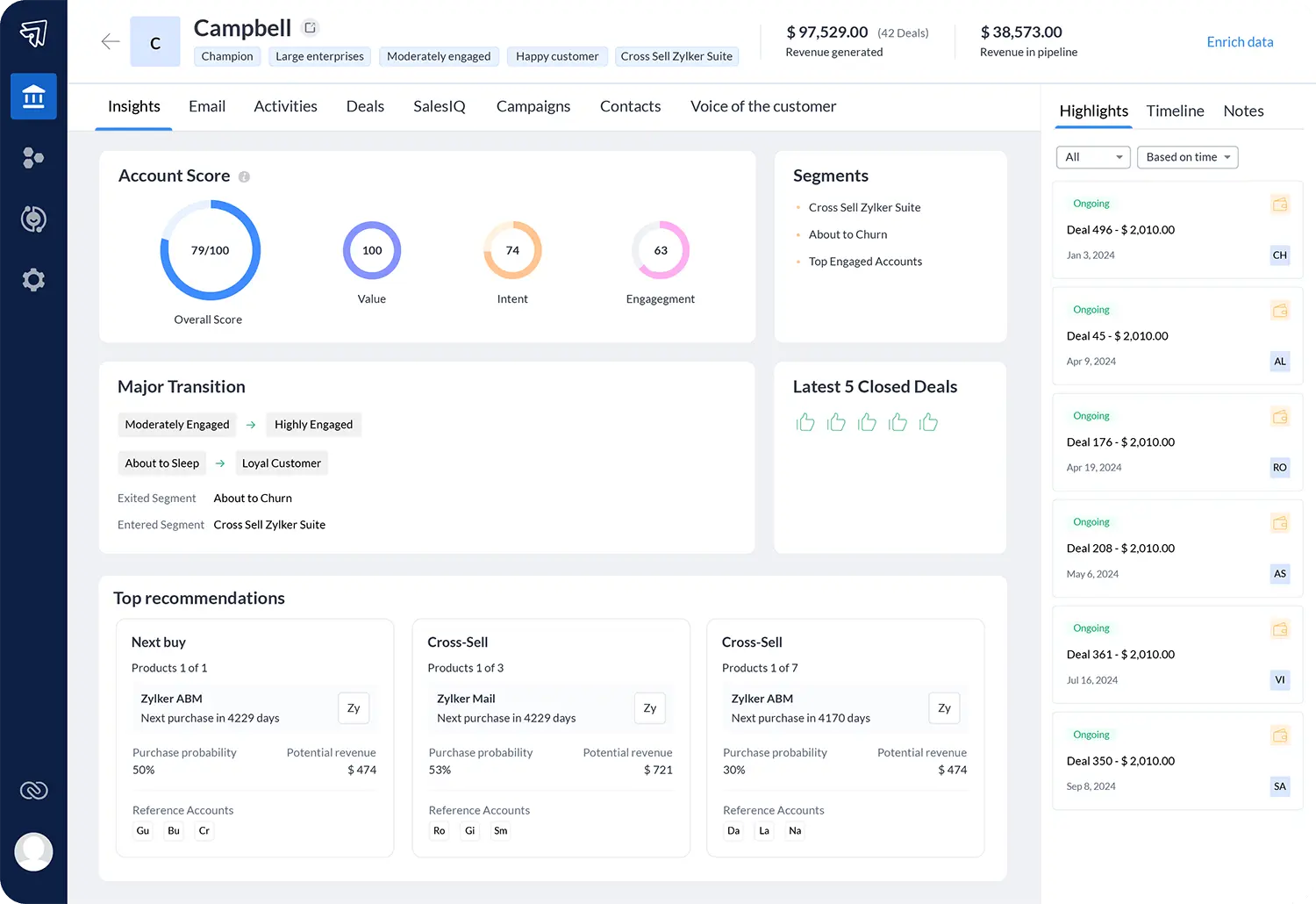
Zoho CRM is the default choice for UAE SMEs, and for good reason. It is mature, accessible, and part of an ecosystem of 50+ business apps including Zoho Books, which appears on the FTA's accredited tax software register. The combination of Zoho CRM for pipeline and Zoho Books for VAT-compliant invoicing is one of the leanest complete stacks a small UAE business can run.
The CRM includes lead scoring, workflow automation, the Zia AI assistant, omnichannel communication (email, phone, social, WhatsApp), and strong customization through Canvas and Deluge scripting. Zoho also maintains a significant presence in Dubai, with local events, partners, and support.
Best for: SMEs from 3 to 100 users that want maximum functionality per dirham and a clean path to VAT-compliant accounting.
Limitations: The interface can feel dense, and very large or complex sales organizations tend to outgrow its reporting and data model.
3. Salesforce
Salesforce is the global market leader and the safest choice for large UAE enterprises with complex, multi-team sales processes. Sales Cloud offers unmatched depth in territory management, forecasting, CPQ, and AI (Einstein and Agentforce), and the AppExchange marketplace covers nearly any integration need. Banks, airlines, telecoms, and government-linked entities in the UAE run on it, and Salesforce has invested in a Hyperforce presence in the region for data residency.
The trade-off is cost and complexity. Meaningful deployments almost always require certified implementation partners, admin headcount, and paid add-ons. Mid-market UAE companies frequently discover that licensing is only half the real annual commitment.
Best for: Enterprises with 50+ sales users, complex processes, and dedicated CRM admin resources.
Limitations: High total cost of ownership. Arabic right-to-left support has improved but remains partial across products. Finance still lives in another system, so the CRM-to-invoice gap needs middleware.

4. HubSpot CRM
HubSpot built its reputation on a genuinely useful free CRM, and it remains the best zero-cost starting point for a UAE startup. Contact management, deal pipeline, email tracking, forms, and live chat are free forever. The paid Sales, Marketing, and Service Hubs then layer on automation, sequences, ABM tools, and reporting.
HubSpot's strength is usability. Teams adopt it without training, which is the single biggest predictor of CRM success. Its weakness in the UAE context is depth on the finance side: invoicing and VAT are not its world, so you will pair it with an accounting or ERP system from day one.
Best for: Startups and marketing-led SMEs that live on inbound leads and content.
Limitations: Costs escalate quickly at Professional and Enterprise tiers. Limited Arabic support. Deep customization is weaker than Salesforce or Dynamics.
.webp)
5. Microsoft Dynamics 365
For UAE organizations standardized on Microsoft 365, Teams, and Azure, Dynamics 365 Sales is the path of least resistance. It embeds directly into Outlook and Teams, shares the Dataverse with the rest of the Power Platform, and lets you build custom apps and automations with Power Apps and Power Automate. Copilot AI is woven through the sales workflow. Microsoft's UAE data center regions also answer data residency questions that some regulated industries face.
Dynamics is also the natural CRM companion when the ERP is Business Central or Finance & Operations, giving Microsoft-first companies their own version of the unified front-and-back office story.
Best for: Mid-size and large enterprises already invested in the Microsoft stack.
Limitations: Licensing is notoriously confusing, and implementation quality varies widely by partner. Standalone, without the Microsoft ecosystem, it is harder to justify against rivals.

6. Odoo CRM
Odoo has grown rapidly across the Gulf, helped by an open-source core, and an official Middle East presence. The CRM module is clean and Kanban-driven, and its real appeal is the modular suite around it: invoicing, accounting, inventory, HR, and e-commerce can all be switched on as you grow, on the same database. Odoo also appears on the FTA's accredited software register, which matters for UAE tax compliance.
The honest caveat: heavily customized Odoo implementations depend entirely on the quality of the local partner, and cheap implementations are a common source of regret.
Best for: Cost-conscious SMEs that want an integrated suite and are comfortable with a partner-led model.
Limitations: Out-of-the-box depth per module is thinner than dedicated best-of-breed tools. Upgrades on customized systems require discipline.
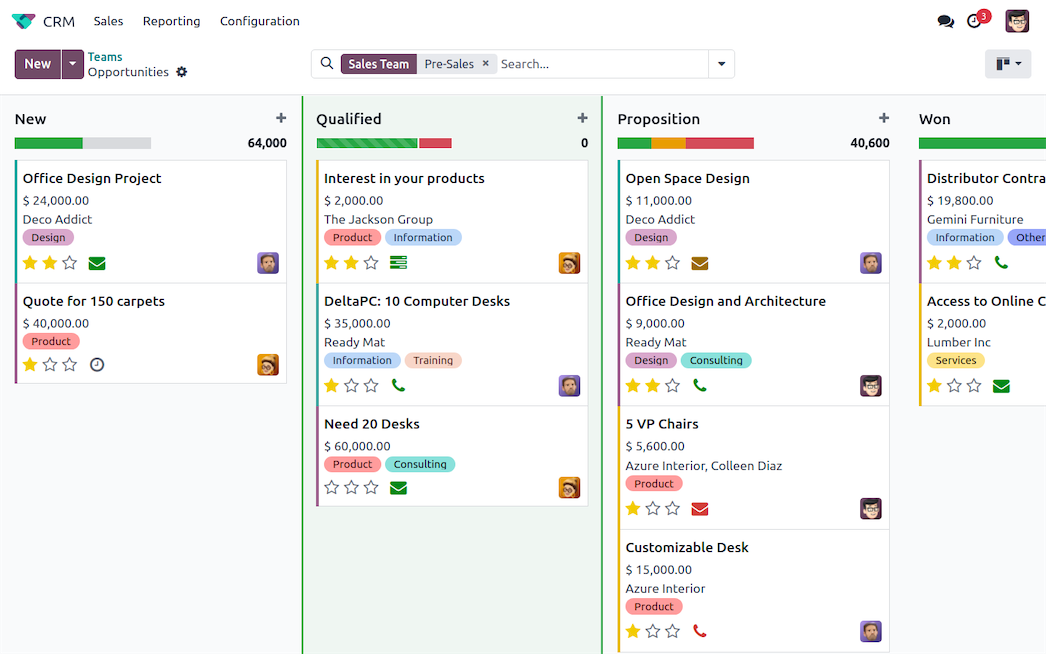
7. Freshsales
Freshsales, part of Freshworks, is a polished sales CRM with one of the best free tiers in the market and native WhatsApp integration on paid plans, which lands well with UAE sales teams. Freddy AI handles lead scoring, deal insights, and email drafting. The interface is modern and adoption is fast.
Best for: Growing sales teams of 5 to 50 that want AI features and WhatsApp without enterprise complexity.
Limitations: Reporting and customization ceilings appear as complexity grows. Finance-side integration is connector-based.
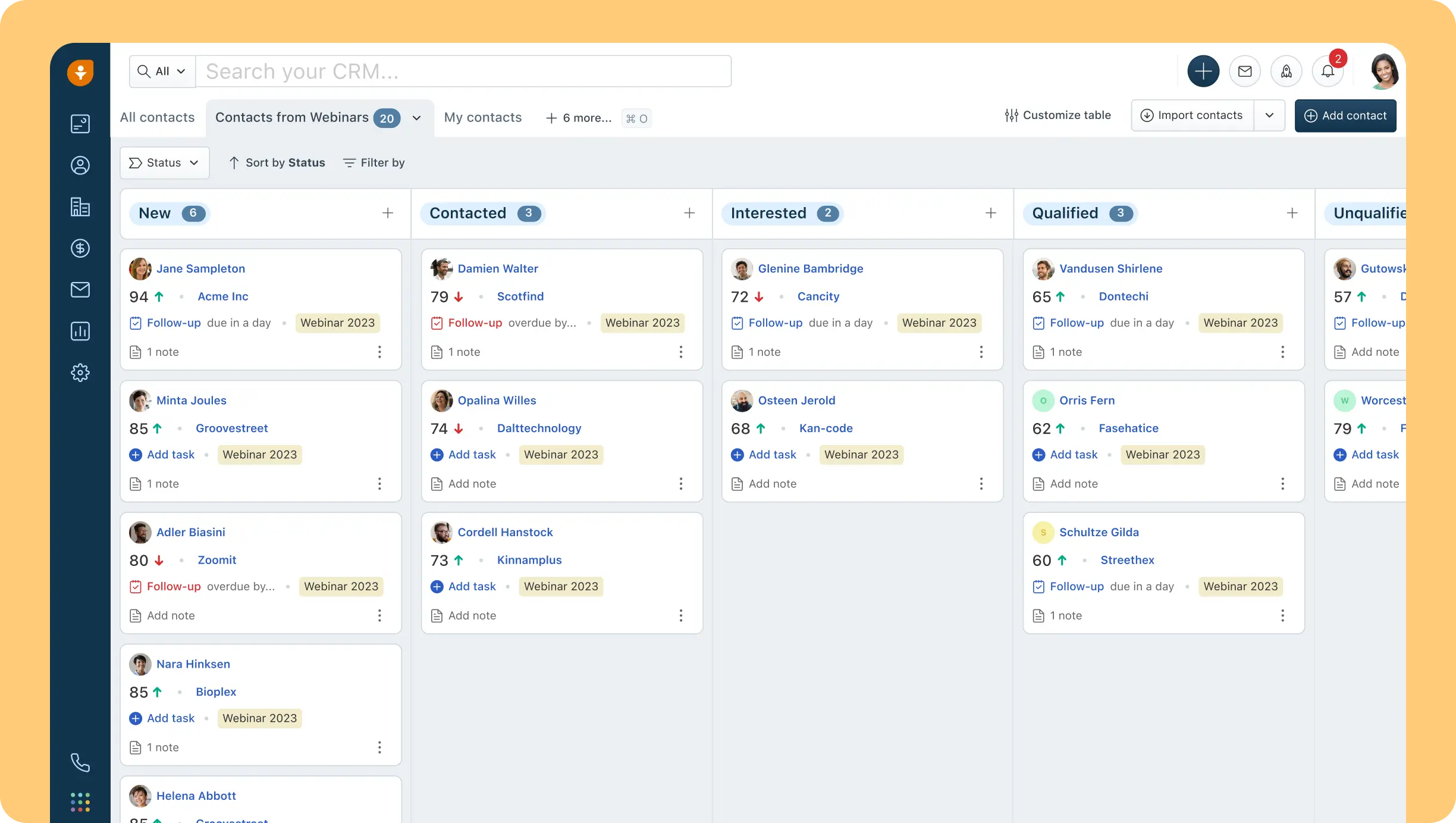
8. Pipedrive
Pipedrive does one thing extremely well: visual pipeline management for small sales teams. Reps actually use it, which puts it ahead of more powerful CRMs that die from neglect. Automation, email sync, and an AI sales assistant round out the paid tiers, and the marketplace covers WhatsApp and regional tools through third-party apps.
Best for: Sales teams under 20 people focused purely on deals and activity.
Limitations: No marketing suite, no service module, no Arabic interface, and no finance depth. It is a sales tool, not a business platform.
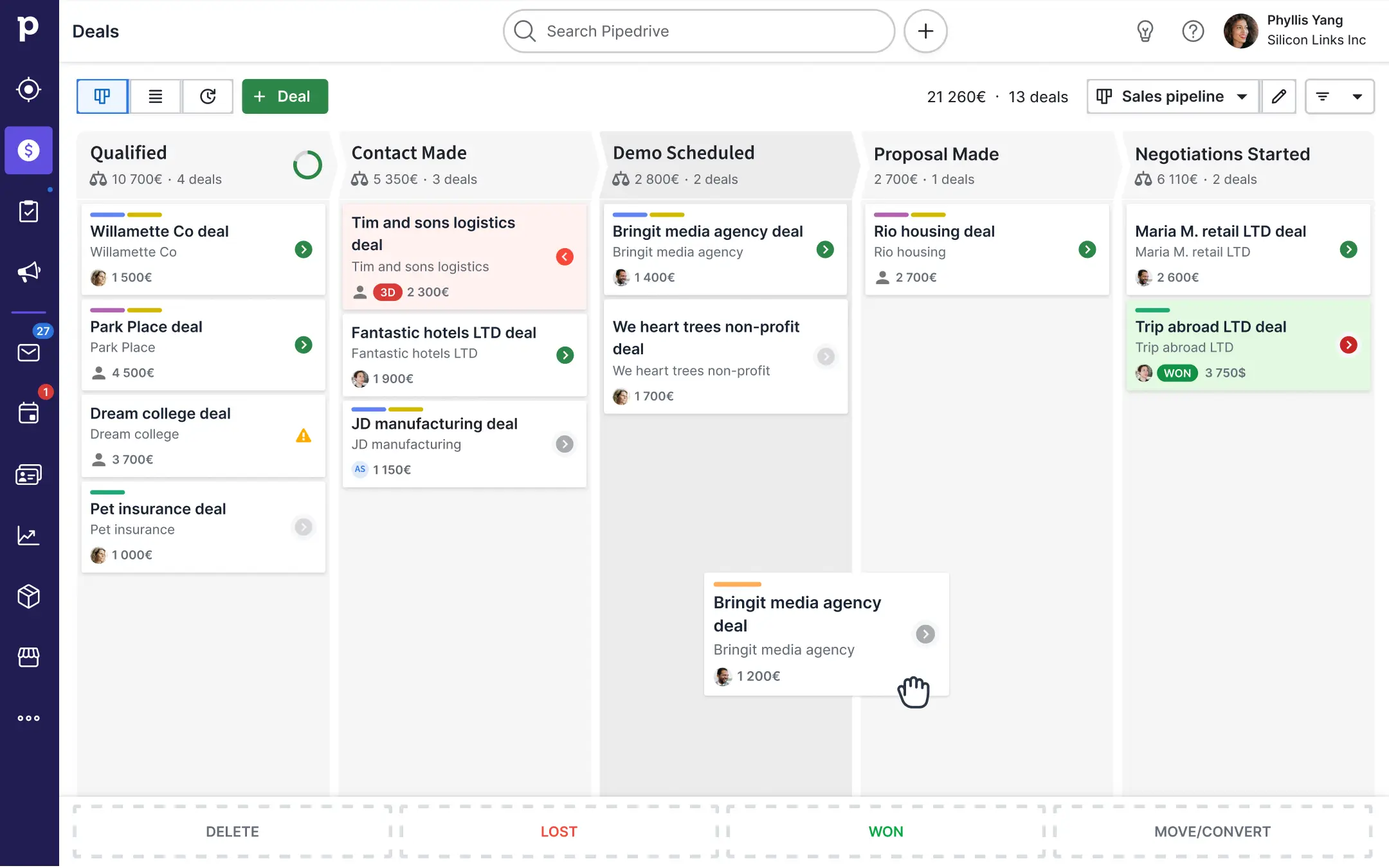
9. Bitrix24
Bitrix24 appears on nearly every UAE shortlist because it bundles an enormous amount into one platform: CRM, tasks and projects, telephony, website builder, HR tools, and native WhatsApp integration. It runs on organization-wide plans rather than per-user seats, and it offers a generous free plan. It has a substantial installed base across the Gulf and supports Arabic.
Best for: Teams of 10 to 100 that want CRM plus collaboration in one flat-rate package.
Limitations: The all-in-one breadth comes with a cluttered interface, and depth in any single area trails specialists.

10. monday sales CRM
Built on the monday.com Work OS, this CRM wins on visual clarity and flexibility. Pipelines, boards, and automations are configured without code, and teams that already manage projects in monday get a seamless extension into sales. It suits process-driven teams in real estate, agencies, and services, all big UAE verticals.
Best for: Teams that value customizable workflows and visual management over deep CRM analytics.
Limitations: It is a flexible database more than a true CRM engine. Forecasting, lead scoring, and native channel integrations are lighter than rivals.

11. Vtiger CRM
Vtiger is an underrated all-in-one that packs sales, marketing, and helpdesk into its "One" edition at an accessible entry point for most UAE SMEs. It has a long open-source heritage, a native WhatsApp integration, and a One View concept that unifies customer data across teams. For businesses that want Zoho-style breadth without a heavy commitment, it deserves a trial.
Best for: Budget-conscious SMEs that need sales and support in one tool.
Limitations: Smaller partner ecosystem in the Gulf, and the interface feels a generation behind the leaders.

12. LeadSquared
LeadSquared specializes in high-velocity, high-volume B2C sales: education enrollment, healthcare, financial services, and real estate call centers. Its strength is lead capture from every channel, automated routing, call center workflows, and field-force tracking. Several UAE education and healthcare groups run it precisely because generic CRMs choke on thousands of daily inquiries.
Best for: B2C businesses processing high inquiry volumes with telecalling teams.
Limitations: Not designed for long-cycle B2B enterprise sales, and onboarding requires a sales conversation rather than self-service signup.
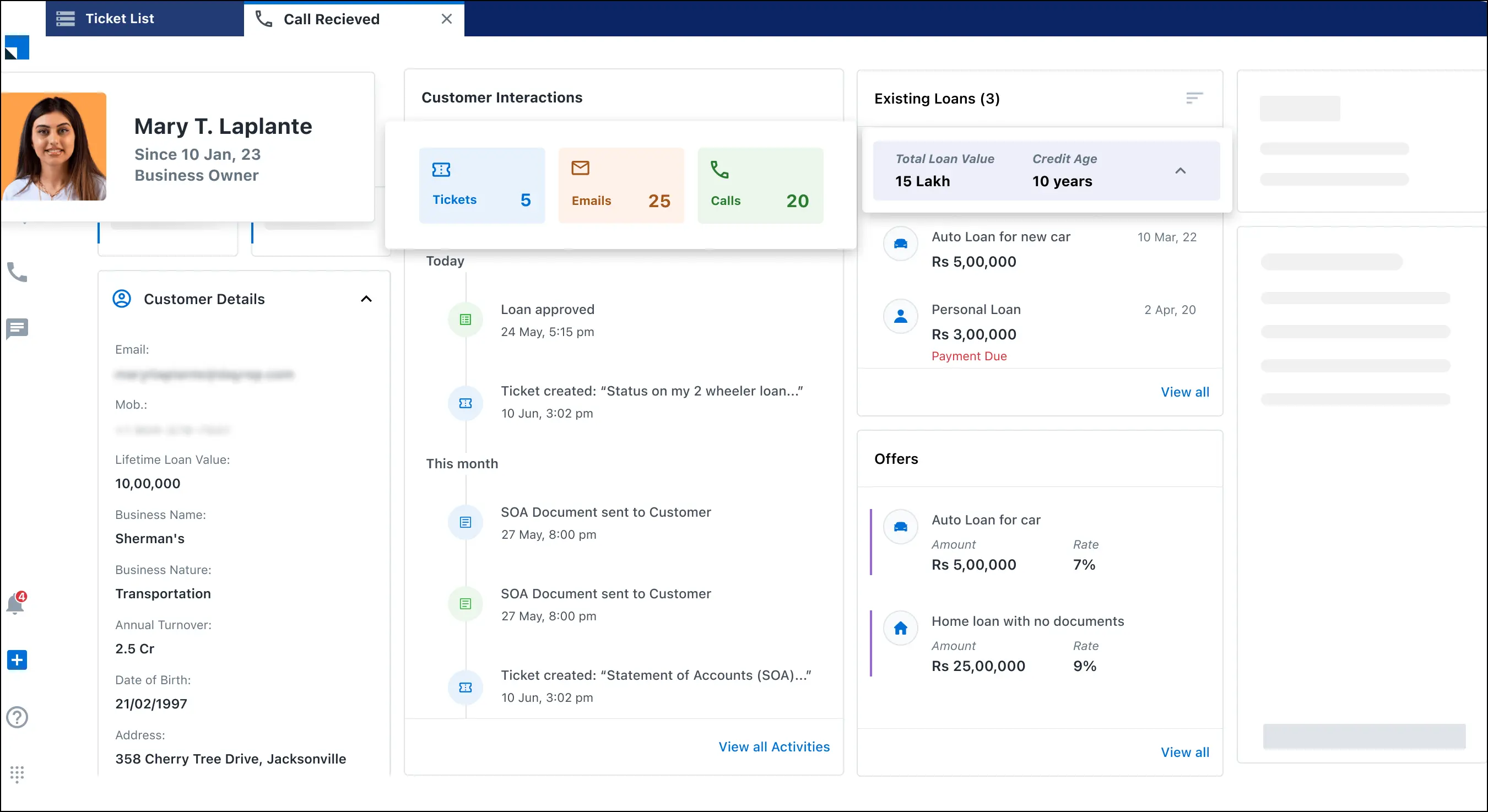
13. ActiveCampaign
ActiveCampaign is a marketing automation platform with a sales CRM attached, not the reverse. Its automation builder is arguably best in class: multi-step journeys, behavioral triggers, predictive sending, and now AI-driven campaign creation. The bundled deal pipeline is serviceable for small teams whose growth engine is email.
Best for: E-commerce and digital-first SMEs where email and journey automation drive revenue.
Limitations: The CRM layer is thin for outbound B2B teams. No Arabic interface. Costs climb with contact list size.

14. Brevo
Brevo (formerly Sendinblue) approaches CRM from the campaign side: email, SMS, and WhatsApp campaigns with a free sales CRM included. For UAE micro-businesses, the ability to run WhatsApp campaigns from the same tool as email, on a free or cheap plan, is genuinely useful.
Best for: Very small businesses that need affordable multichannel campaigns more than pipeline management.
Limitations: The sales CRM is basic. No serious B2B pipeline, forecasting, or finance capability.
.webp)
15. Kommo (formerly amoCRM)
Kommo rebranded from amoCRM and repositioned itself as the messenger-based sales CRM, which fits the UAE market unusually well. WhatsApp, Instagram, and Telegram conversations flow directly into pipelines, with salesbots automating first responses and qualification. For trading companies, clinics, and agencies that sell primarily through chat, Kommo often beats bigger names on actual usage.
Best for: Chat-first sales teams of 2 to 30 people.
Limitations: Light on reporting, marketing, and finance. Long-cycle B2B teams will find it shallow.

16. Zoko
Zoko is not a traditional CRM. It is a WhatsApp commerce platform built around a deep Shopify integration, and that is exactly why it earns a place on a UAE list. Product catalogs sync to WhatsApp, abandoned carts trigger automated recovery flows, order updates go out automatically, and a multi-agent shared inbox lets a whole team sell and support from one WhatsApp number, with AI chatbots layered on top. For a Dubai D2C brand where WhatsApp drives the majority of orders, Zoko can outperform a general CRM on actual revenue impact.
Best for: Shopify-based e-commerce brands selling and supporting primarily through WhatsApp.
Limitations: WhatsApp and Shopify centric by design. No B2B pipeline, no email marketing depth, and usage scales with message volume, so model your real conversation numbers before committing.
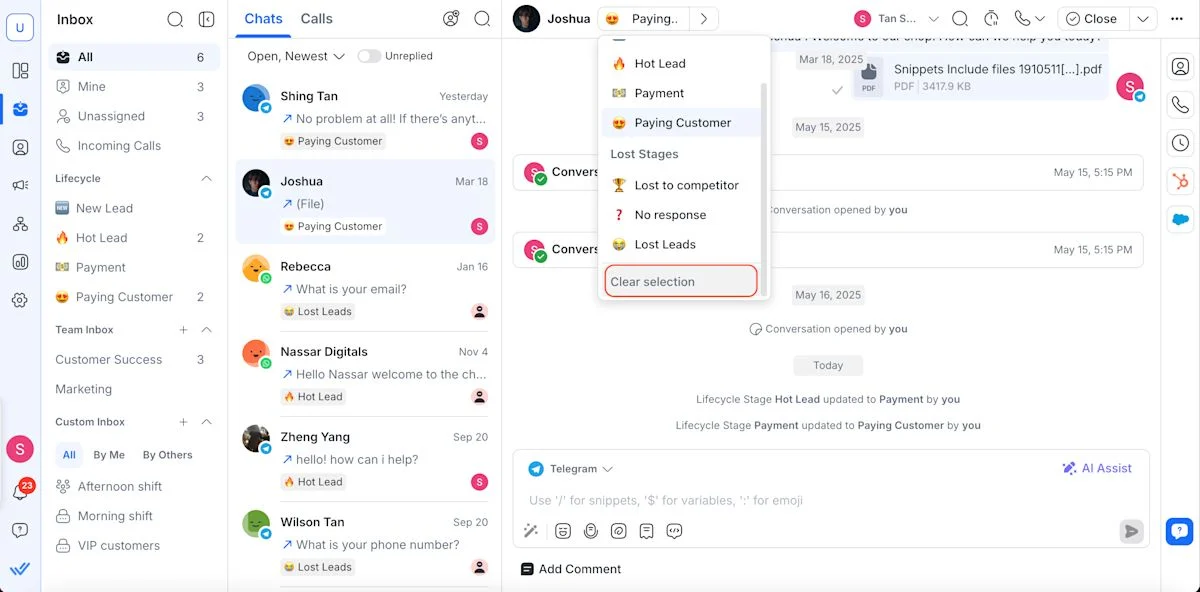
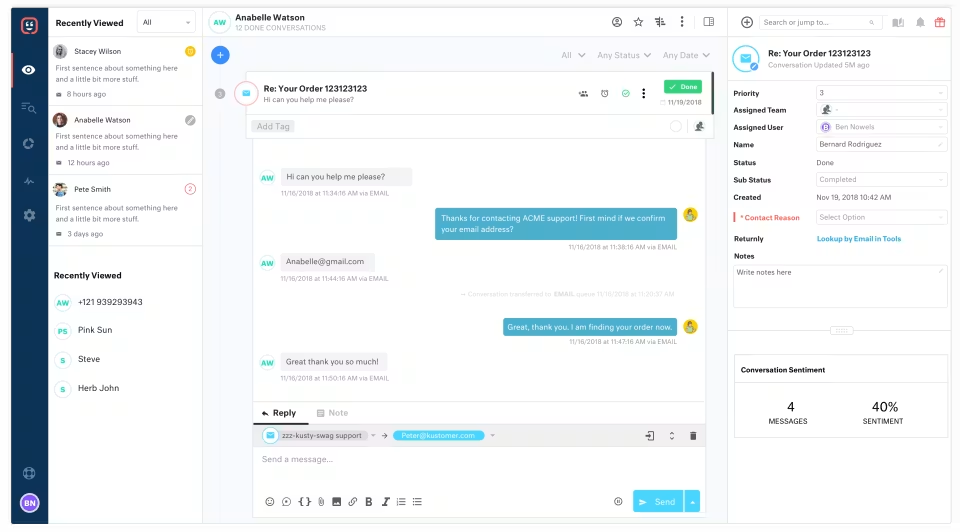
17. Kustomer
Kustomer, owned by Meta between 2022 and 2023 and now independent again, is a customer service CRM rather than a sales CRM. It unifies every conversation and order into a single customer timeline and applies AI agents to deflect and resolve tickets. UAE e-commerce and consumer brands with heavy support volume are its natural audience, especially given native WhatsApp depth.
Best for: Consumer brands running large support operations across chat channels.
Limitations: It is not a sales pipeline tool. It is positioned firmly at the enterprise service desk.
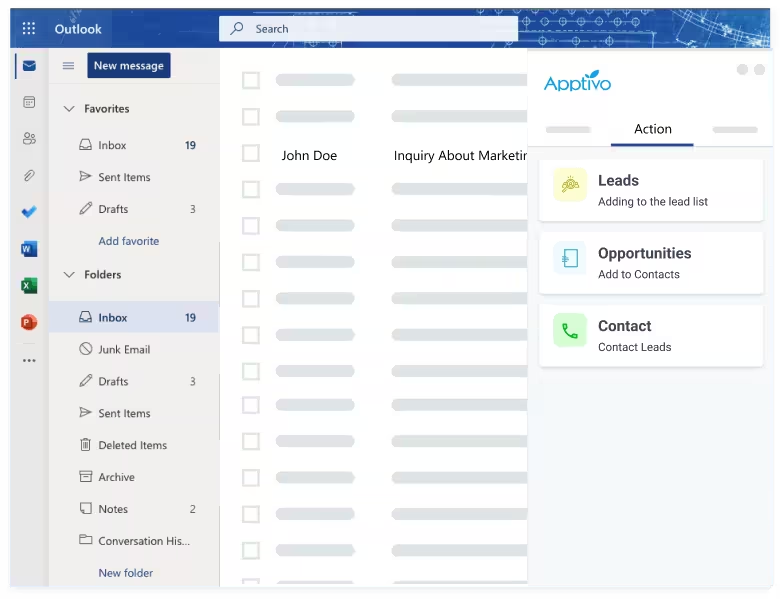
18. Apptivo
Apptivo bundles 65+ lightweight business apps: CRM, invoicing, projects, procurement, and more. It is a reasonable Swiss Army knife for a very small UAE trading or services company that wants one login for everything and cannot justify bigger platforms.
Best for: Micro-businesses of 1 to 10 users consolidating basic tools.
Limitations: Every module is shallow, the interface is dated, and regional support presence is minimal.
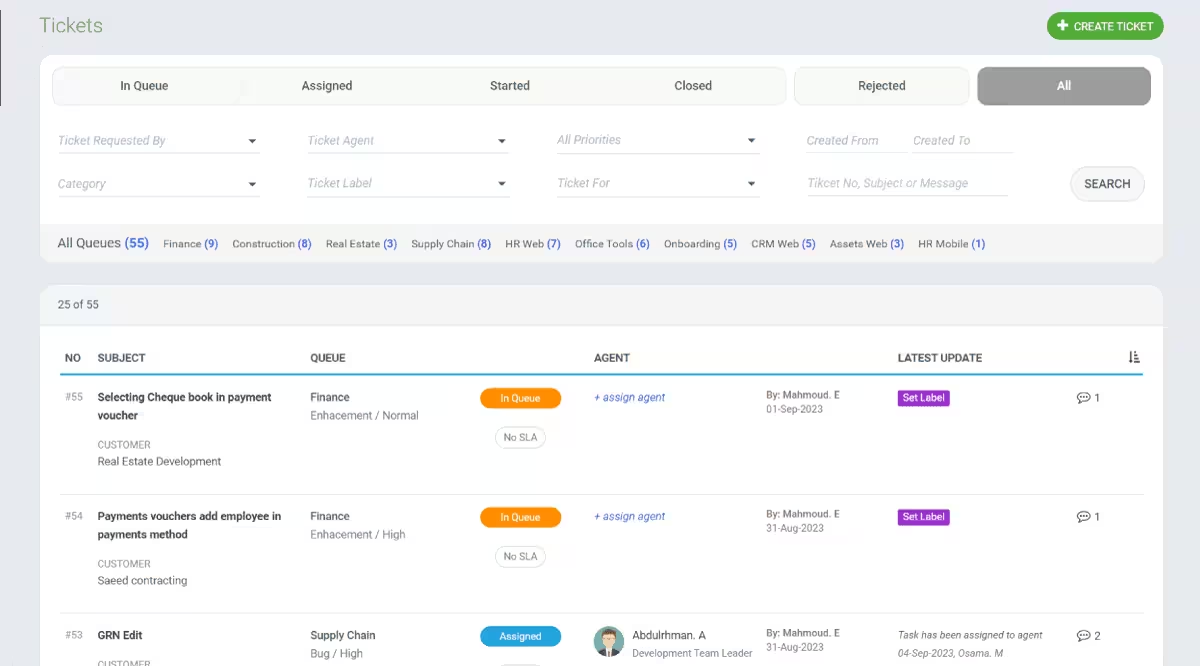
19. CorporateStack CRM
CorporateStack is a Dubai-founded platform, built and supported by a development team based in the UAE, which makes it one of the few genuinely local options on this list. The CRM covers sales automation, lead and opportunity management, quotations, invoicing, and payment collection, and it connects to CorporateStack's own ERP, HRMS, and asset management modules. Arabic and English support, UAE compliance awareness, and on-the-ground consultants are its core pitch, and it is even distributed through the Etisalat/e& business marketplace.
Best for: UAE SMEs, especially in real estate and services, that prioritize local support and Arabic capability.
Limitations: Smaller ecosystem and integration marketplace than the global players. Companies scaling internationally may hit ceilings.
20. Zarina CRM
Zarina CRM takes a contrarian model for 2026: a one-time lifetime license instead of a subscription, deployed on your own server or private cloud. Developed in Romania with a Dubai presence, it offers industry editions (Sales, Services, Medical, Real Estate) and includes modules for offers, invoicing, payments, and document automation. It advertises bridges for UAE FTA e-invoicing and Saudi ZATCA compliance, plus AI-based lead prioritization, and the on-premise model gives full data ownership, which appeals to firms wary of cloud data residency.
Best for: SMEs that want to escape the subscription model and keep data on their own infrastructure.
Limitations: On-premise means you own the server, backups, and uptime. The vendor footprint and community are small compared with the global platforms, so evaluate support commitments carefully.
_converted.avif)
How to Choose a CRM for a UAE Business
Start from your invoice, not your pipeline. Map how a closed deal becomes a VAT-compliant invoice today, and count the systems and manual steps in between. If that chain is broken, an integrated platform (NetSuite, Dynamics with Business Central, Odoo) will save you more than any pipeline feature. If your invoicing already works, a best-of-breed CRM (Zoho, HubSpot, Pipedrive, Freshsales) is the faster win.
Then apply four UAE-specific filters. First, e-invoicing readiness for the 2027 mandate: ask every vendor how quote and order data reaches an accredited billing system. Second, WhatsApp: insist on a demo of real two-way WhatsApp conversations inside the CRM, not a marketplace listing. Third, Arabic and multi-currency, tested with your actual data. Fourth, implementation support: a certified partner with delivered projects in the Emirates, referenceable by phone.
Finally, evaluate year three, not month one. Per-user subscriptions, contact-based tiers, mandatory add-ons, and admin headcount decide the real commitment. A platform that looks heavy on day one is often the leaner choice by year three once middleware, integration maintenance, and duplicate data entry are counted.
Frequently Asked Questions
What is the best CRM software in UAE for small businesses? Zoho CRM offers the best balance of features, usability, and local presence for UAE SMEs, with HubSpot's free CRM as the best zero-cost starting point and Bitrix24 the strongest all-in-one option for larger small teams.
Which CRM is best for large companies in the UAE? Salesforce and Microsoft Dynamics 365 lead the pure-CRM enterprise segment. Companies that also need ERP, financials, and multi-subsidiary consolidation should evaluate NetSuite, where CRM is part of a unified suite.
Do I need a CRM that supports UAE VAT and e-invoicing? Your CRM does not file VAT or transmit e-invoices, but it must pass clean quote and order data into a system that does. With mandatory e-invoicing phasing in from 2027, the integration between CRM and accredited billing software is now a selection criterion, not an afterthought.
Which CRMs support WhatsApp in the UAE? Zoho, Freshsales, Bitrix24, Kommo, Vtiger, Brevo, Kustomer, CorporateStack, and Zarina offer native or built-in WhatsApp capability. Zoko is a dedicated WhatsApp commerce platform for Shopify stores. Salesforce, HubSpot, and Dynamics rely on partner integrations.
Is Arabic language support available in these CRMs? NetSuite, Zoho, Dynamics 365, Odoo, Bitrix24, CorporateStack, and Zarina offer Arabic interfaces or strong right-to-left handling. Several others handle Arabic data but present an English-only interface.