.svg)


End-to-End Business Process for Apparel, Footwear and Accessories
A dress is one product. A dress in eight colors and ten sizes is eighty things to count, pick, ship, and value. That gap between what a business merchandises and what it actually handles is the structural fact of apparel, and every link in the chain has to work at both levels at once. This guide maps the apparel, footwear and accessories value chain end to end, and shows where the two levels have to stay connected and where the system will not do it for you.
The Short Answer
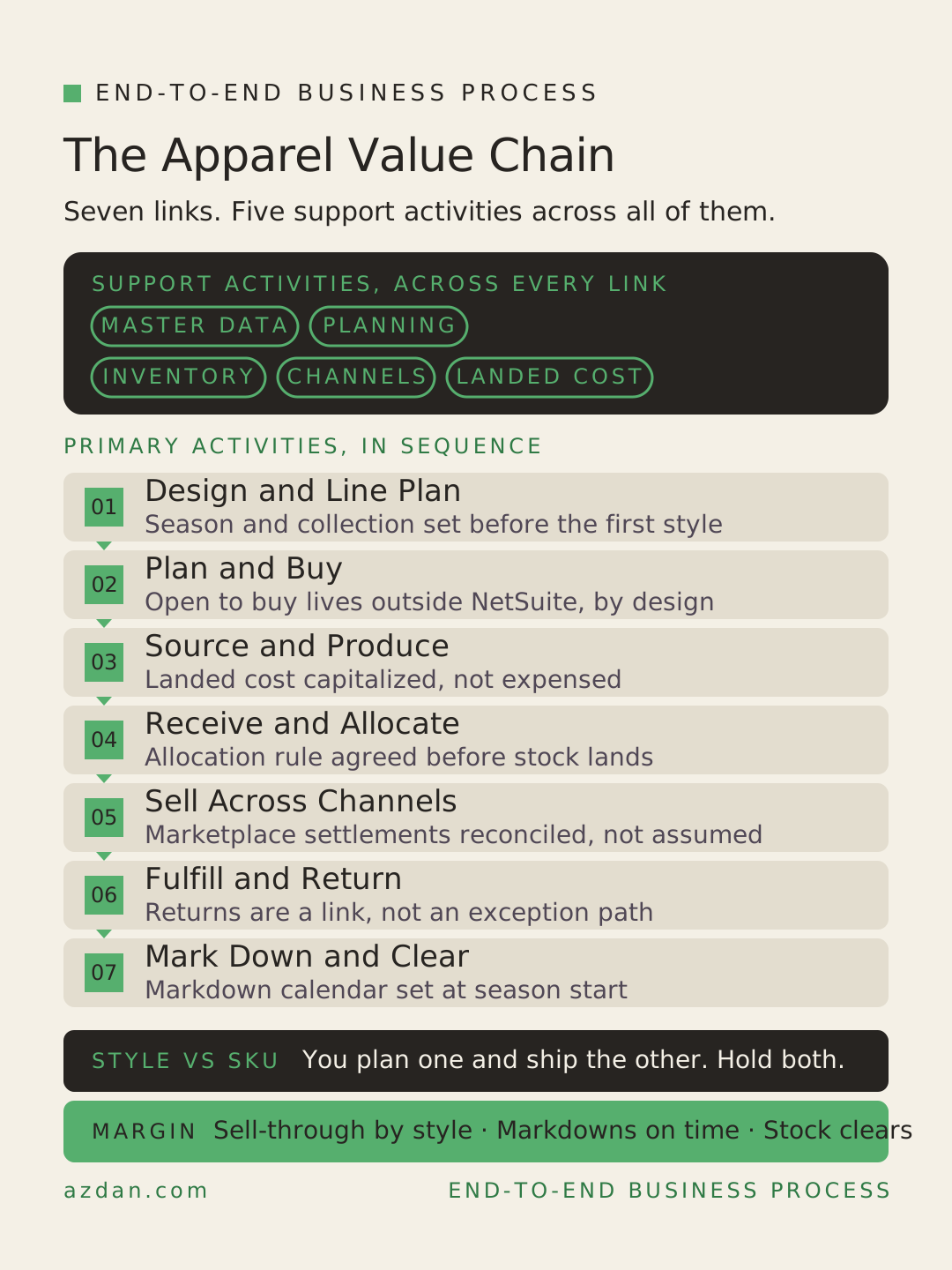
The apparel value chain runs in seven links:
Design and Line Plan → Plan and Buy → Source and Produce → Receive and Allocate → Sell Across Channels → Fulfill and Return → Mark Down and Clear
Three things make it different from a general distribution chain. The unit you plan is not the unit you sell, so style and SKU have to be held together in one structure. The planning link mostly happens outside the ERP, by design rather than by accident. And value decays on a season clock rather than a shelf-life clock, which makes markdown timing the margin decision rather than a clearance afterthought.
Methodology note. This maps the end-to-end process using the value chain model, applied to the apparel, footwear and accessories process design Azdan works with across its NetSuite delivery in the UAE, Saudi Arabia, and Egypt. Where a point reflects delivery experience rather than measured data, it is labeled as a recommendation.
Why Apparel Does Not Think in Modules
NetSuite's own leading practice for this sector makes an observation worth repeating: apparel businesses typically do not consume software as ERP process areas. The industry's own vocabulary is line plans, seasons, buys, allocations, sell-through, and markdowns, and the leading practice has to map those topical areas back onto traditional ERP processes rather than the other way around.
That is exactly why a value chain view is the right one here. A module list describes what the software does. A value chain describes what the business does, in the order it does it, and it is the only view where a merchandiser and a controller can look at the same picture and both recognize their own work.
The problems the sector brings to an ERP project are consistent: inventory that is not used effectively, an inability to expand into new channels, order processes that are slow and error-prone, no reliable visibility of stock, and manual work that cannot scale. Every one of those is a link problem, not a module problem.
The Structural Fact: Style and SKU Are Different Objects
Before the chain, the data structure, because it determines what every link can and cannot do.
The thing a business designs, plans, buys, and reports on is the style. The thing it picks, ships, counts, and values is the SKU, which is a style at a specific color and size. One style in eight colors and ten sizes is eighty SKUs. A two hundred style season is sixteen thousand of them.
NetSuite holds both in a matrix item: a parent representing the style and children representing each color and size combination. The recommended structure is Style, then Color, then Size, with the parent as the style itself and each child as the individual sellable SKU.
The reason this matters beyond data modeling is that several platform features work at one level only, and it is not always the level the business thinks in:
Read the middle rows carefully. Planning conversations happen at style level and the planning tools operate at SKU level, which is the single largest source of friction in this vertical and the reason the planning link sits partly outside the ERP.
Four further consequences that are easy to discover too late:
- The parent level decides what your storefront looks like. If the parent represents the style, the product page is one page per style with color and size both selectable. If the parent represents style and color together, you get a separate page per color with only size selectable. Without matrix items at all, color swatches cannot appear on a single page. This is a merchandising decision disguised as a data modeling decision, and it should be made with the ecommerce team in the room.
- There is a hard ceiling of 2,000 child SKUs per matrix parent. Generous for most, but a business with very deep size runs across many colorways should check the arithmetic before committing to a structure.
- Grid order entry caps at 200 cells. Grid Order Management exists so a wholesale order of several hundred lines can be entered as a matrix rather than line by line, but the grid is limited to 200 squares, so ten colors by ten sizes fits and a much wider assortment does not. Templates are two-dimensional and have a one-to-one relationship with the style, so every style entered this way needs its own template.
- Bulk creation should go through CSV import. The matrix item assistant in the interface is cumbersome and, done wrong, produces incomplete items. Recommendation: treat item creation as a data load exercise with validation, not as a task for the merchandising team to do by hand in the interface.
A related detail that pays for itself: define all item options before creating any matrix items, and segment long option lists by an attribute such as color family, season, or vendor so they stay usable.
The Apparel Value Chain
Primary activities, in sequence:
Support activities, running across every link:
- Item and matrix master data
- Merchandise planning and open to buy
- Inventory accuracy and allocation
- Channel and marketplace integration
- Landed cost and trade compliance
The margin: sell-through visible by style, markdowns taken on time rather than in panic, and a season that clears.
Item and matrix master data heads that list for the same reason financial control heads it in an agency. It is not administration behind the work. Every other link inherits its structure, and a matrix built wrongly cannot be corrected quietly once thousands of SKUs carry transactions.
The Seven Links
1. Design and Line Plan
Styles are created, seasons and collections assigned, and the assortment takes shape.
The fields that matter later are set here. Season denotes the selling season for a style and is used in place of standard financial periods for time-based selling reports, which is a genuine departure from how most businesses report. Year records when a style was first offered, which matters for carryover styles. Collection and Category give lower-level groupings for reclassification, pricing updates, and promotions. And the NRF Color Code translates internal color names into the standard code vendors expect, so Pelican Blue becomes 402 when it reaches a factory.
Recommendation: agree the attribute set before the first style is created. Retrofitting a season or collection field across an existing item master is possible but it is a data project, and it usually happens at the worst moment, when someone asks for a sell-through report by collection.
2. Plan and Buy
Assortment planning, open to buy, and the purchase commitment.
This link is covered in its own section below, because the honest answer about where it happens is not the obvious one.
3. Source and Produce
Factory purchase orders, production, quality inspection, and inbound freight.
For businesses importing finished goods, this is where landed cost enters. Freight, duty, and insurance are part of the cost of getting the garment to a sellable condition, and if they are expensed rather than capitalized into item cost, gross margin is overstated on everything imported. Quality inspection sits here too, with inspections triggered into a queue where a quality manager controls assignee, priority, and status.
4. Receive and Allocate
Goods arrive and are assigned to channels and locations. This is the link with the least documentation and the most commercial consequence.
Allocation is where a business decides whether a limited buy goes to wholesale accounts, retail stores, or the ecommerce warehouse, and the decision is usually made under pressure with incomplete information. Recommendation: define the allocation rule before the season starts, in writing, rather than settling it style by style as stock lands. An allocation policy argued in advance is a policy. Argued at receipt, it is whoever shouts loudest.
5. Sell Across Channels
Wholesale, retail, ecommerce, and marketplaces, usually all at once and from shared stock.
In this region that means the marketplace layer specifically: Noon, Amazon, Namshi, and direct storefronts, each with its own listing structure, order format, and settlement file. Settlement reconciliation is the part that is routinely underestimated. Marketplace payouts arrive net of commissions, fees, and returns, and matching them back to orders is a real process with a real owner, not a month-end afterthought.
Grid Order Management belongs here for wholesale, letting a buyer's multi-hundred-line order be entered by style rather than line by line, with optional size run distribution so a shirt order defaults across sizes by percentage rather than being typed out.
6. Fulfill and Return
Pick, pack, ship, and then a return rate that no other product category has to plan for.
Returns are a primary link in apparel, not an exception path. Fit drives them, ecommerce amplifies them, and a garment that comes back has to be inspected, restocked or written off, and credited. The return to credit process needs a named owner and a defined disposition rule, because the difference between restocking and writing off is a margin decision being made by a warehouse operative.
7. Mark Down and Clear
The link most value chains do not have, and the one where apparel margin is won or lost.
Brands work through a markdown cadence as a season progresses, to move slow-moving stock. It applies most obviously to the consumer channel but wholesale is not exempt. The mechanical requirement is that markdowns are calculated from the original price rather than the current one, because subsequent markdowns compound. That means an Original Price field on the item record holding the base price, separate from whatever the item is selling for today. The cadence can be automated with effective date pricing.
Recommendation: set the markdown calendar at the start of the season, with sell-through thresholds attached. A markdown taken on a schedule against data is a margin decision. A markdown taken when the warehouse is full is a loss being recognized late.
Planning Happens Outside the ERP
This is the finding most vendor material will not tell you, and it comes from NetSuite's own leading practice for the sector.
NetSuite's Demand Planning module is not recommended as the planning tool for apparel businesses. It does not fit how the sector plans, and the specific gaps are named:
- Open to buy cannot be calculated by the module at all. For a business that plans in OTB terms, that is the whole job.
- Supply and demand plans are built per SKU, not per style. The planning conversation happens at style level, so the tool works at the wrong grain.
- Seasonal demand calculation handles only a single season. A business running spring, summer, and fall cannot express its actual calendar.
- The Supply Chain Control Tower snapshot is SKU level only, with no style rollup.
The leading practice recommendation is to plan externally, in a specialist merchandise planning tool or in a spreadsheet, then import the resulting plan into NetSuite via CSV. Once it is in, the platform's execution features work normally: generating purchase orders from planned items, replenishing locations by transfer order, creating work orders in bulk, and calculating availability to promise.
Two implications for anyone designing this chain. First, the planning link is a genuine external dependency, so the CSV import boundary is a designed interface with an owner and a cadence, not a workaround to be quietly automated later. Second, in-season replenishment is a different problem from pre-season planning, and NetSuite handles it well: reorder points, preferred stock levels, lead times, and safety stock can be auto-calculated from history or set from the external plan.
Recommendation: do not let an implementation promise open to buy inside NetSuite. It is the single most common scope misunderstanding in this vertical, and it surfaces during user acceptance testing when the buying team asks to see their OTB sheet.
The Season Clock
One more structural difference worth naming explicitly.
Most businesses report on fiscal periods. Apparel reports on seasons, which is why the season field substitutes for standard financial periods in time-based selling reports. Spring 2026 is the unit of analysis, and it does not align to a quarter.
That has a reporting consequence and a behavioral one. The reporting consequence is that any dashboard built purely on fiscal periods will be regarded as irrelevant by the merchandising team, and they will keep their own spreadsheet. The behavioral one is that value decays against the season, not against an expiry date. A coat is not spoiled in March, it is simply worth less, and it will be worth less again in April. That decay curve is what makes markdown timing the margin lever.
Recommendation: build the selling reports on season from the start, and reconcile to fiscal period rather than the reverse. The finance team can map seasons to periods. The merchandising team cannot merchandise a quarter.
What Breaks: Seven Recurring Failures
These are patterns that recur in apparel, footwear and accessories businesses. They are drawn from delivery experience and offered as recommendations rather than measured findings.
- The matrix parent level chosen without the ecommerce team. It determines the shape of the product page, and it is discovered after thousands of SKUs exist.
- Item options defined after items are created. Options have to exist first. Working around it produces incomplete items that look complete.
- Matrix items built by hand in the interface. The assistant is cumbersome and produces incomplete items when misused. CSV import with validation is the reliable path.
- Open to buy assumed to be in scope. It is not available in the Demand Planning module, and assuming otherwise misprices the project and disappoints the buying team.
- No Original Price field. Markdowns compound off original price, so without it the second markdown is calculated from the wrong base.
- Allocation decided at receipt. A policy argued under pressure with stock on the dock is not a policy.
- Marketplace settlements reconciled manually. Payouts net of commission, fees, and returns will not reconcile themselves, and the effort scales with every channel added.
Which Apparel Business Are You
The chain is common to the sector, but its center of gravity shifts by model, and Azdan maintains separate industry practices for each.
- Wholesale and brand. The chain is heaviest at plan, buy, and allocate, with Grid Order Management and size runs carrying the order volume. Sell-through visibility at the retail partner is the hard part. See NetSuite ERP for Wholesale Distribution.
- Retail and multi-store. The chain bends around store inventory, promotions, and a unified customer record, with click-and-collect and in-store returns joining the fulfill link. See NetSuite ERP for Retail.
- Ecommerce and marketplace. The chain is heaviest at sell, fulfill, and return, with marketplace listings, order sync, and settlement reconciliation dominating. Return rate is the defining economic variable. See NetSuite ERP for E-Commerce.
Most apparel businesses of any scale are all three at once, which is the real complication. The chain has to serve a wholesale buyer placing a pre-season order, a store manager checking stock, and a marketplace API, from the same inventory.
Recommendation
If you are mapping an apparel business end to end, settle two things before anything else is designed.
First, the matrix structure, with the ecommerce team present, because the parent level decides both the data model and the storefront and it is expensive to reverse.
Second, where planning will actually live. If the answer is open to buy, the answer is not the Demand Planning module, and the sooner that is agreed the better the project goes. Design the import boundary properly and treat it as part of the chain.
Then check one number: sell-through by style against the markdown calendar. If the business cannot produce it, the chain is broken somewhere between the buy and the season close, and every margin conversation is happening after the fact.
Sources
- Oracle NetSuite, What Is Value Chain? An Expert Guide, for the value chain model and its primary and support activity structure
- Oracle NetSuite, NetSuite Apparel ERP
- Michael E. Porter, Competitive Advantage: Creating and Sustaining Superior Performance, 1985, for the original value chain framework
Process content reflects apparel, footwear and accessories leading practice as applied by Azdan, checked August 2026.
Related Azdan Resources
- End-to-End Business Process for Advertising
- How to Implement NetSuite for Manufacturing
- Oracle NetSuite Implementation
Published by Azdan, an Oracle NetSuite Solution Provider operating across the UAE, Saudi Arabia, and Egypt. Guidance in this article reflects Azdan's process design work with apparel, footwear and accessories businesses. Content checked August 2026.