.svg)

.webp)
TL;DR: The six leading logistics and shipping extensions for NetSuite are SuiteFleet (own-fleet last-mile delivery and TMS, Azdan Company), Descartes Pacejet (enterprise multi-carrier shipping, parcel and LTL), ShipHawk (parcel and LTL with Smart Packing cartonization), FreightPOP (multi-modal carrier TMS with 300+ carriers), NetScore Delivery Routing (own-fleet delivery routing for SMBs), and ShipStation (multi-carrier label management for e-commerce). Choose based on whether you run your own fleet, ship via third-party carriers, or both.
Oracle NetSuite manages orders, inventory, billing, and fulfillment workflows well. What it does not do natively is route a driver through 40 delivery stops in the optimal sequence, rate-shop across 300 carriers in real time, cartonize a mixed-SKU shipment before it reaches the dock, or send automated delivery notifications to customers.
For most logistics-intensive NetSuite users, that gap requires an extension. The options range from solutions built directly inside NetSuite's SuiteCloud platform to hybrid integrations that sit adjacent to it. Each makes different tradeoffs between depth, scope, and the type of logistics problem it solves.
This guide covers the six solutions most commonly deployed by NetSuite customers, what each one actually does, and how to match the right tool to your operation.
A Note on Integration Types
Not every solution in this list is technically a SuiteApp. The term gets used loosely. Three integration types appear across this category:
Native SuiteApps are built directly on the SuiteCloud platform and run entirely within NetSuite. There is no separate application to log into. Data lives in NetSuite records. SuiteFleet and NetScore Delivery Routing fall into this category.
Hybrid SuiteApps are listed on the SuiteApp Marketplace and integrate tightly with NetSuite, but some workflows run in a separate environment. ShipHawk and Descartes Pacejet use this model.
Connector-based integrations link a standalone platform to NetSuite via API or middleware. FreightPOP and ShipStation are in this category. They work well but require managing a separate platform and login outside NetSuite.
The 6 Logistics and Shipping Solutions at a Glance
Solutions covering last-mile, freight & parcel
Carriers accessible via FreightPOP alone
Shipping cost reduction reported by Pacejet customers
Processing time cut per shipment by ShipHawk
Integration models: native, hybrid, connector
| Suite Fleet |
Pace jet |
Ship Hawk |
Freight POP |
Net Score |
Ship Station |
|
|---|---|---|---|---|---|---|
| Route optimization | ✓ | – | – | ✓ | ✓ | – |
| Driver mobile app | ✓ | – | – | – | ✓ | – |
| Multi-carrier rate shop | ✓ | ✓ | ✓ | ✓ | – | ✓ |
| LTL / freight support | ✓ | ✓ | ✓ | ✓ | – | – |
| Packing / cartonization | ✓ | ✓ | ✓ | – | – | – |
| 3PL connectivity | ✓ | ✓ | ✓ | ✓ | – | ✓ |
| Freight audit | – | – | ✓ | ✓ | – | – |
1. SuiteFleet
Best for: Retailers, distributors, logistics providers, and courier businesses running their own delivery fleets on NetSuite.
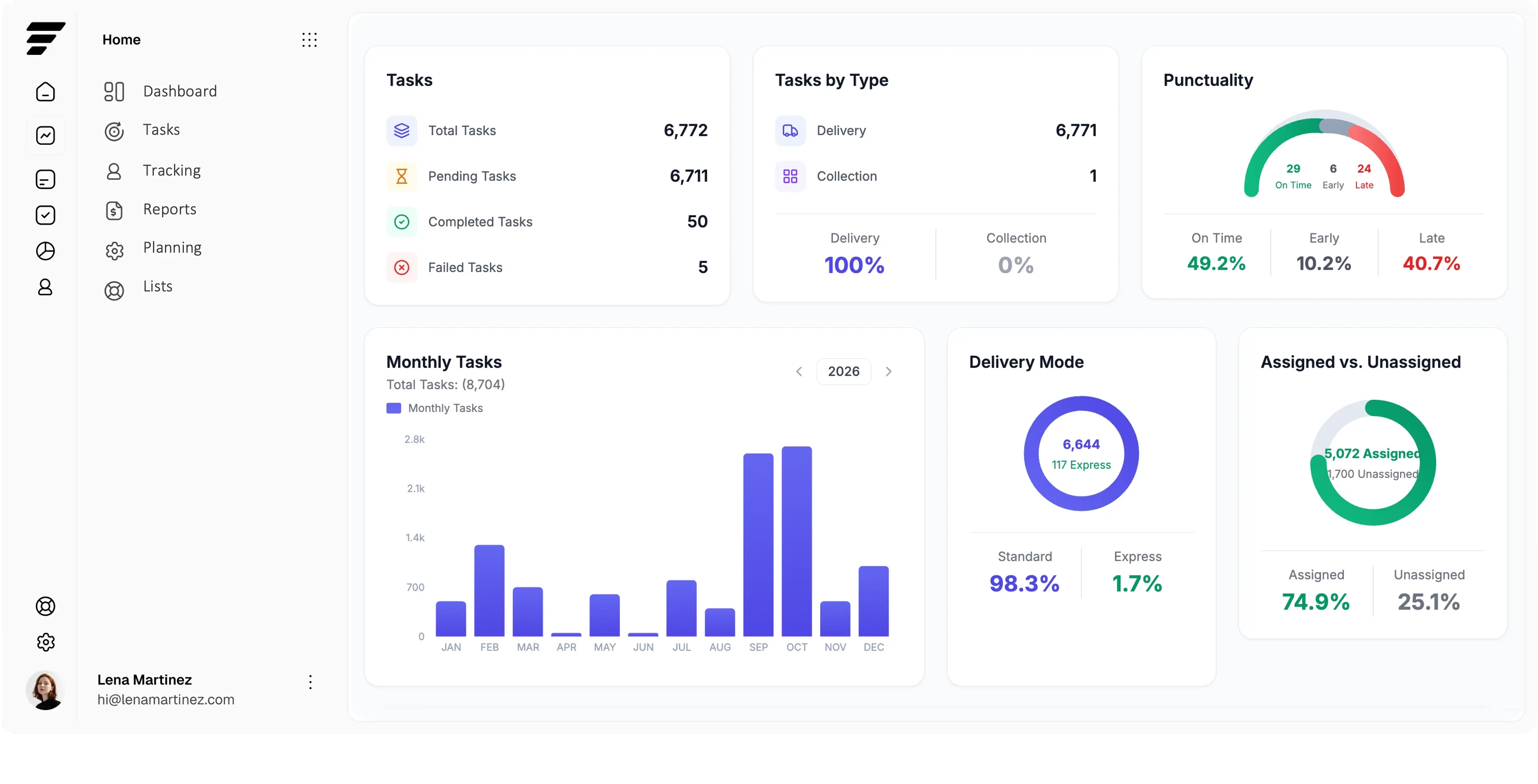
SuiteFleet is a last-mile delivery and transportation management platform built natively for Oracle NetSuite. Developed by SuiteFleet DMCC, an Azdan Company, it operates entirely within the NetSuite environment across four dedicated SuiteApps: TMS, Deliver, Fleet, and Dispatch. Orders placed in NetSuite flow directly into route planning without any export, import, or manual handoff.
Key strengths:
- AI-powered route optimization that accounts for vehicle capacity, time windows, traffic, and multi-stop sequencing
- Live fleet tracking with driver location visibility from within NetSuite
- Driver mobile app for turn-by-turn navigation, digital proof of delivery (photo, signature, notes), and real-time status updates
- Delivery billing and invoicing generated from completed delivery events inside NetSuite
- 3PL connectivity for hybrid fleets mixing owned vehicles and third-party couriers
- Fleet maintenance scheduling integrated with vehicle records in NetSuite
- Customer notification and self-serve delivery tracking portal
- AI agent for dispatch recommendations and delivery exception management
SuiteFleet's distinction is that it handles the entire last-mile lifecycle, from dispatch planning to customer notification to billing, without leaving NetSuite. Finance teams see delivery completions reflected in AR immediately. Dispatchers work inside the same system the warehouse and finance teams use. There is no data sync between systems because there is only one system.
Beyond NetSuite, SuiteFleet also connects to SAP, Salesforce, Microsoft Dynamics, Oracle Fusion, and Shopify, making it viable for multi-ERP environments or businesses transitioning to NetSuite.
Limitation: SuiteFleet is focused on last-mile and own-fleet operations. Businesses that exclusively ship via third-party carriers without operating any delivery vehicles of their own would be better served by a carrier-rate-shopping solution like FreightPOP or Descartes Pacejet.
See: SuiteFleet for NetSuite | Azdan TMS for NetSuite
2. Descartes Pacejet
Best for: Mid-market to enterprise manufacturers, distributors, and B2B/B2C shippers who need multi-modal carrier management at scale from inside NetSuite.
Descartes Pacejet is one of the most mature shipping SuiteApps available, with over 15 years of continuous development specifically for NetSuite customers. More than 800 companies use it to manage over $1 billion in annual freight and parcel spend. It supports parcel, LTL, FTL, 3PL, and export modes in a single platform certified by Oracle.
Key strengths:
- Rate shopping from quotes, sales orders, item fulfillments, transfers, and purchase orders, covering more NetSuite transaction types than most competitors
- Predictive packing that reflects actual package count and dimensions in quotes before shipping, reducing dimensional surcharges
- Configurable rate-shopping rules that automatically select the cheapest, fastest, or best-service option per shipment
- Carrier network spanning 65+ parcel and LTL carriers with direct API and EDI connectivity
- Customers report 20 to 30% reduction in shipping rates and 80% reduction in fulfillment labor
- Customizable dashboards and shipping analytics for rate tracking, carrier performance, and warehouse throughput
- Compatible with a wide range of NetSuite SuiteApps including WMS solutions
Pacejet's depth is its main advantage. It handles the most complex shipping configurations, including multi-pallet B2B freight, compliance-required labeling, and multi-location fulfillment, in a way that most competitors do not match. Its 15-year history of NetSuite-specific development means edge cases that surface in complex deployments typically have a solution already built.
Limitation: Enterprise pricing and implementation scope make Pacejet a significant investment. It is positioned at mid-market to enterprise shippers and may be over-specified for businesses primarily shipping small parcel with simple carrier relationships.

3. ShipHawk
Best for: High-volume retailers, manufacturers, and distributors who ship a combination of parcel and LTL freight and need automated packing optimization alongside carrier selection.
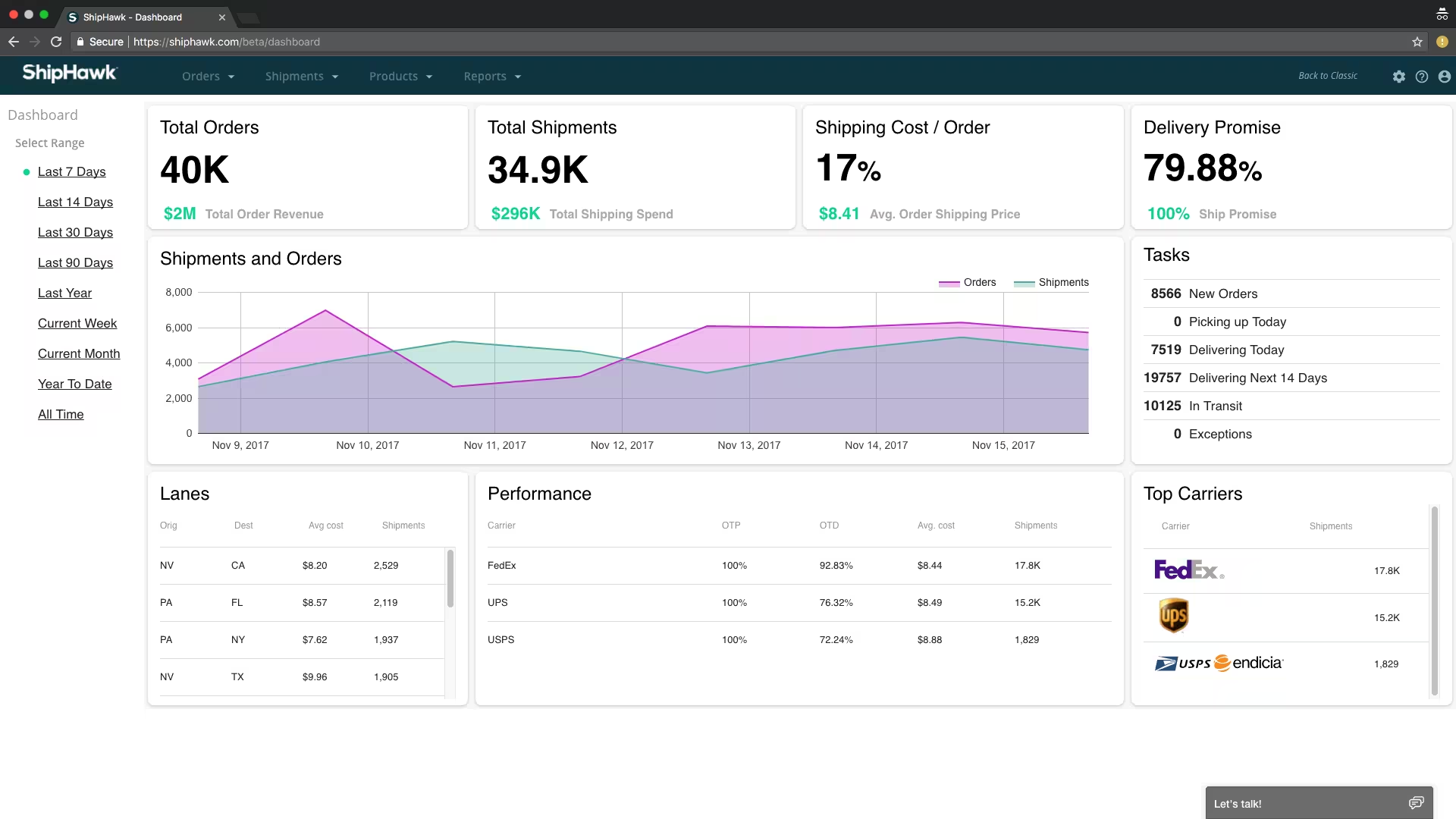
ShipHawk is a hybrid SuiteApp listed on the NetSuite Marketplace that handles multi-carrier shipping across parcel, LTL, and FTL modes. Its defining feature is Smart Packing, a cartonization algorithm that virtually fits items into the optimal box or pallet configuration in real time before generating rates. This matters because dimensional pricing from carriers like UPS and FedEx makes inaccurate package sizing expensive.
Key strengths:
- Smart Packing algorithm selects the right carton or pallet for every order, reducing material cost and carrier dimensional surcharges
- Dynamic rules engine applies business-specific logic, including SLA requirements, carrier preferences, cost thresholds, and service level rules
- Parcel, LTL, and FTL consolidated into one platform with hundreds of carrier options
- Shipping data pulled from NetSuite item fulfillments, rates returned and written back automatically
- Customers report 20% shipping cost reduction from automated rate shopping and packing optimization combined
- WMS module available for scan-pack verification, directed picking, cycle counting, and EDI compliance
- 93% reduction in per-shipment processing time reported by ShipHawk customers
ShipHawk positions itself squarely for the warehouse: the platform automates decisions that warehouse staff would otherwise make manually, from which box to use to which carrier to select. For operations processing hundreds of orders daily across mixed parcel and LTL, eliminating those manual decisions at the packing station has a measurable impact on throughput and cost.
Limitation: ShipHawk is a hybrid SuiteApp rather than a fully native solution. Some workflows, particularly exception management and complex configuration, require operating outside the NetSuite UI. It is also primarily focused on North American shipping; businesses with significant cross-border or international freight requirements should validate carrier coverage before committing.
4. FreightPOP
Best for: Manufacturers, distributors, and importers who manage outbound freight across multiple carriers and modes and need a centralized TMS for rate shopping, freight booking, and invoice auditing.
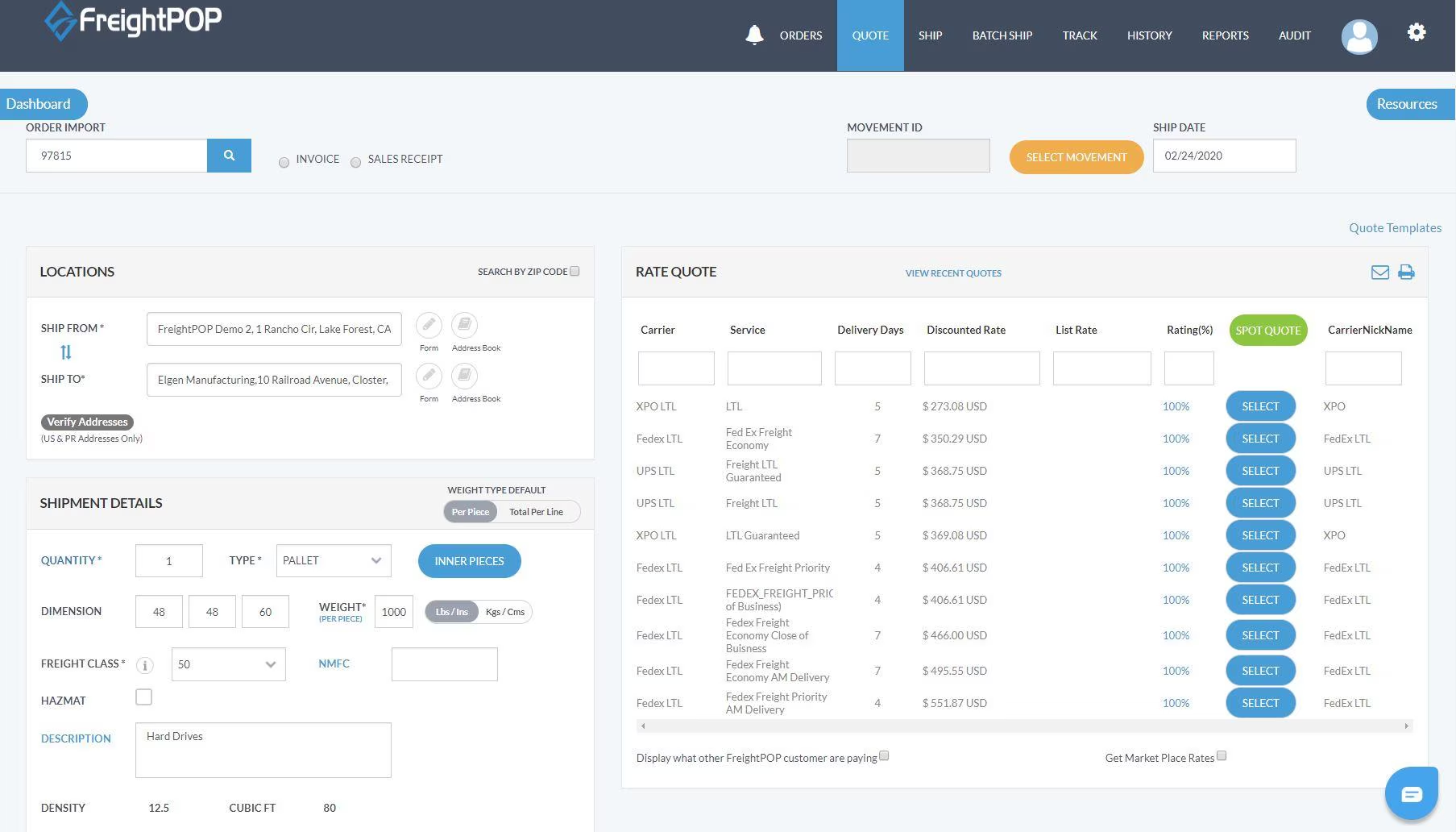
FreightPOP is a cloud-based transportation management system with a native NetSuite integration that synchronizes purchase orders, sales orders, and shipments bidirectionally between the two platforms. It covers every major shipping mode: parcel, LTL, FTL, ocean, and international air, all managed from a single login. Its carrier network includes more than 300 carriers, brokers, and marketplaces.
Key strengths:
- Real-time rate shopping across parcel, LTL, FTL, ocean, and air carriers in one interface
- Automated label creation, bill of lading generation, and packing slip output
- Freight invoice auditing that identifies overcharges, accessorial billing errors, and duplicate charges
- Dock scheduling for inbound and outbound shipment coordination
- Outbound and inbound shipment visibility with tracking and status updates pushed back to NetSuite
- Route optimization module for delivery planning
- Analytics dashboards for carrier spend, transit times, and on-time performance
FreightPOP's strength is breadth of carrier coverage and mode support. For businesses that routinely ship via ocean freight, cross-border air, and domestic LTL in the same week, having all modes inside one platform with rates synced to NetSuite eliminates the fragmented workflow of managing multiple carrier portals. The freight audit function also adds direct cost recovery that partially offsets platform cost.
Limitation: FreightPOP is a standalone platform with a NetSuite connector, not a SuiteApp that runs inside NetSuite. Teams work in a separate interface for rate shopping and booking, then return to NetSuite for order management. Businesses that prioritize a single-platform workflow may find this context-switching friction.
5. NetScore Delivery Routing
Best for: Small and mid-sized NetSuite businesses that operate their own delivery vehicles and need route optimization, driver dispatch, and proof of delivery without enterprise-level complexity.
NetScore Delivery Routing is a native NetSuite SuiteApp built specifically for businesses that deliver via their own fleet of trucks or vans. It automates route planning, assigns routes to drivers, and provides a mobile app for navigation and delivery confirmation. All data, including delivery status, signatures, and photos, updates directly inside NetSuite.
Key strengths:
- AI-powered route planning that optimizes stop sequences by order destinations, vehicle capacity, and traffic
- Driver mobile app for Android and iOS with turn-by-turn navigation and semi-offline capability for low-connectivity areas
- Proof of delivery capture including digital signatures, photos, and delivery notes, synchronized to NetSuite records
- Automated invoice generation in NetSuite triggered by completed deliveries
- Dispatcher view for route assignment, re-assignment, and live driver location tracking
- Return management handled from the driver app
- Customers report 25% or greater efficiency improvement after implementation
NetScore Delivery Routing is the simpler, more accessible alternative to SuiteFleet for businesses with own-fleet delivery needs that do not require the full depth of a TMS. It handles the core dispatching and proof-of-delivery workflow cleanly within NetSuite without a complex implementation.
Limitation: NetScore Delivery Routing is focused on own-fleet last-mile delivery and does not handle carrier rate shopping, freight management, or 3PL connectivity. Businesses outgrowing its feature set, or those managing hybrid fleet models combining owned vehicles with outsourced carriers, would need to evaluate SuiteFleet or a multi-modal TMS.
.avif)
6. ShipStation
Best for: E-commerce businesses and multi-channel retailers on NetSuite who primarily ship small parcels via third-party carriers and need multi-carrier label management connected to their order workflow.
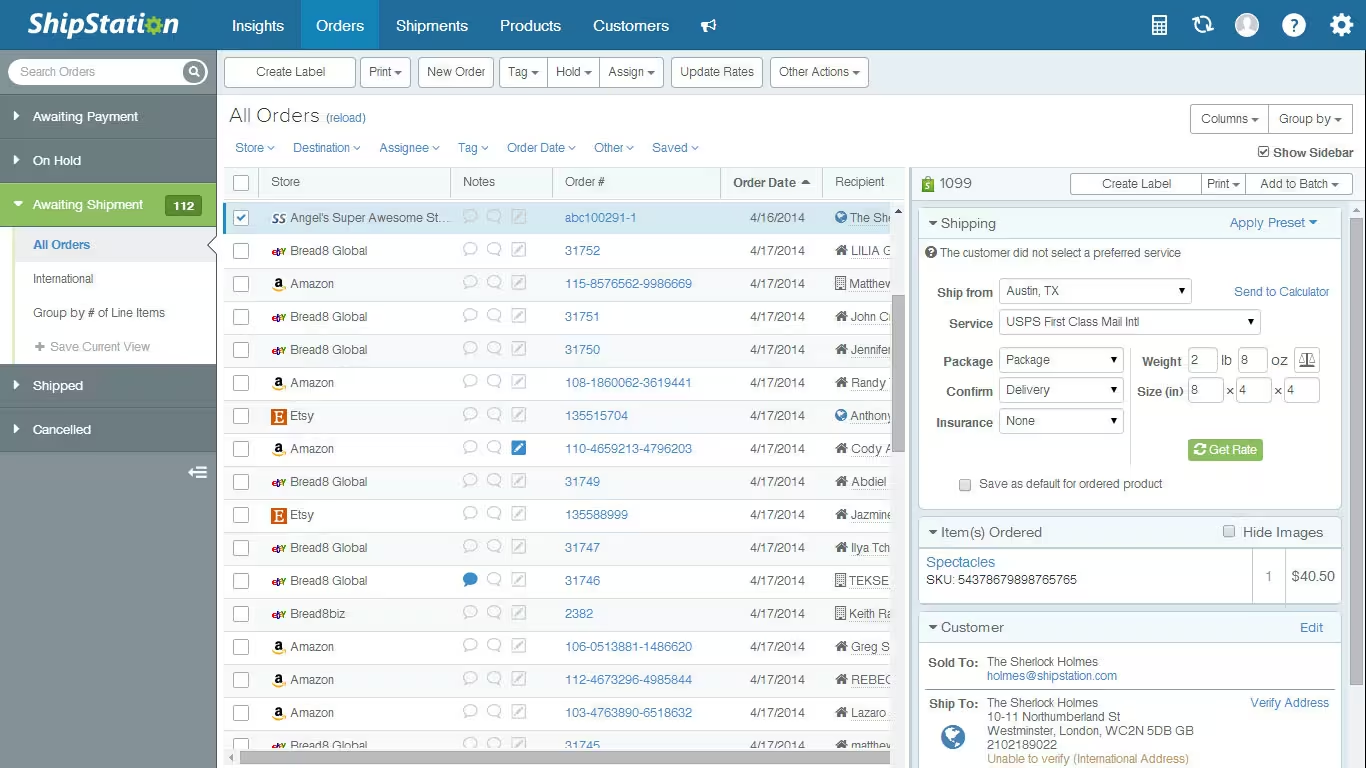
ShipStation is a multi-carrier shipping platform that connects to NetSuite via a connector integration. When sales orders reach fulfillment status in NetSuite, ShipStation imports them, generates shipping labels across 200+ carriers, and returns tracking numbers and actual shipping costs back to NetSuite item fulfillment records. It also connects to storefronts, marketplaces, and 3PL platforms alongside NetSuite.
Key strengths:
- Multi-carrier rate comparison across 200+ carriers with exclusive carrier discounts
- Automated workflow rules for batch processing, carrier selection, and label printing
- Returns management with self-serve customer return portals
- Inventory management and warehouse picking list generation
- Connects to Shopify, Amazon, Magento, BigCommerce, and other channels alongside NetSuite
- International shipping support with customs forms and HS code management
ShipStation is the right tool for e-commerce operations where most outbound shipments are small parcel, carrier selection is primarily about rate and speed, and the NetSuite connector simply needs to pass order data in and shipment data back. Its breadth of channel integrations also makes it useful for businesses managing orders from multiple storefronts that all need to route through a single shipping layer.
Limitation: ShipStation's NetSuite integration is connector-based and supports only three field-mapping variations natively. The integration incurs an additional $200 per month fee on top of ShipStation's base subscription. It is not designed for LTL or freight shipping, does not include packing optimization, and does not support own-fleet dispatch or route planning.
How to Choose the Right Solution
1. Do you operate your own delivery fleet, ship via third-party carriers, or both?
This is the primary decision point. If your business runs its own trucks, vans, or couriers for last-mile delivery, you need a platform with route optimization, a driver mobile app, and proof-of-delivery capture. SuiteFleet handles this at full depth; NetScore covers the essentials for simpler operations.
If you ship exclusively via third-party carriers (UPS, FedEx, DHL, freight brokers), you need a carrier rate-shopping and label-management tool. Descartes Pacejet and ShipHawk both live inside or adjacent to NetSuite and add significant automation to the warehouse shipping station. FreightPOP is the stronger option if multi-modal freight management is the primary need.
If you do both, SuiteFleet's 3PL connectivity module combines own-fleet dispatch with third-party courier management in one platform.
2. What is your primary shipping mode: small parcel, LTL, or freight?
Parcel-first businesses (primarily e-commerce, small B2C orders) are well served by ShipStation or ShipHawk's parcel track. LTL and mixed-mode shippers need the packing optimization and carrier breadth of Descartes Pacejet or ShipHawk. Businesses managing ocean, air, and multi-modal freight at scale will find FreightPOP's mode breadth the clearest match.
3. How important is staying inside NetSuite for your team's workflow?
If a unified platform is a priority, native SuiteApps (SuiteFleet, NetScore) or deeply integrated hybrid SuiteApps (Pacejet, ShipHawk) minimize context switching. If your team is comfortable managing a separate shipping platform, FreightPOP and ShipStation are mature solutions that synchronize effectively with NetSuite.
Frequently Asked Questions
What is a NetSuite SuiteApp?
A SuiteApp is an application built on Oracle's SuiteCloud development platform and listed on the NetSuite SuiteApp Marketplace. Native SuiteApps run entirely within the NetSuite environment, meaning all data, records, and workflows remain inside NetSuite with no separate platform login required. Hybrid SuiteApps are listed on the Marketplace but run some functionality in a separate hosted environment. Connector-based integrations like ShipStation or FreightPOP are not technically SuiteApps but integrate with NetSuite via API. The distinction matters operationally: native SuiteApps require no data sync between systems, which reduces implementation complexity and the risk of records going out of sync.
Can NetSuite handle shipping natively without an add-on?
NetSuite has native carrier integrations with UPS, FedEx, and USPS that allow basic label generation and tracking directly from item fulfillments. For businesses with straightforward single-carrier shipping at lower volume, the native integration may be sufficient. Where native NetSuite falls short is in multi-carrier rate shopping, automated packing optimization, LTL freight management, and own-fleet dispatch. Most businesses with meaningful shipping volume or operational complexity eventually add a dedicated solution in one of those categories.
Is SuiteFleet only for businesses in the Middle East?
No. SuiteFleet is deployed globally across courier and logistics businesses, e-commerce fulfillment operations, FMCG distributors, retail chains, and pharmaceutical delivery networks. Its development by Azdan gives it particularly strong deployment experience across the UAE, Saudi Arabia, and Egypt, where last-mile operations run against specific regional compliance and carrier constraints. For businesses operating in those markets, that regional depth is an additional advantage.
Do I need to replace NetSuite to get a better logistics solution?
No. Every solution in this guide extends NetSuite's capabilities rather than replacing it. NetSuite remains the system of record for orders, inventory, financials, and customers. The logistics extension adds operational depth, from driver dispatch and route planning to carrier rate shopping and freight management, without moving data out of NetSuite or requiring a separate ERP.
What is the difference between a TMS and a shipping SuiteApp?
A transportation management system (TMS) manages the full transportation lifecycle: planning, carrier selection, dispatch, tracking, proof of delivery, and freight cost reconciliation. A shipping SuiteApp typically focuses on a narrower slice, usually carrier rate shopping, label generation, and tracking for outbound parcel shipments. SuiteFleet, FreightPOP, and Descartes Pacejet are TMS solutions in scope. ShipHawk and ShipStation are closer to advanced shipping platforms. NetScore Delivery Routing occupies a middle ground, covering own-fleet dispatch and delivery confirmation without broader freight management.
Can I use more than one logistics SuiteApp simultaneously in NetSuite?
Yes. Many businesses run complementary solutions. A distributor might use Descartes Pacejet for carrier rate shopping on outbound freight and SuiteFleet for managing its own delivery fleet on the final mile. A retailer might use ShipHawk for warehouse fulfillment and ShipStation as a separate parcel management layer for a direct-to-consumer channel. Compatibility between SuiteApps varies; confirm with each vendor that the combination you are evaluating does not create record conflicts in NetSuite.
Find the Right Logistics Extension for Your NetSuite Environment
The right solution depends on how your operation moves goods: own fleet or third-party carriers, small parcel or freight, simple label printing or full TMS depth. For businesses operating delivery fleets on NetSuite, SuiteFleet covers the full lifecycle from dispatch through billing inside a single Oracle NetSuite environment.
Explore SuiteFleet for NetSuite | See Azdan's NetSuite TMS | Book a demo
News & Insights